
Intent-Based Targeting
Static media strategies were built for predictable demand. Today’s demand isn’t predictable, and your spend can’t afford to be either. Media has to operate in real time. Optimize for the right audiences with AI agents that detect emerging intent and shift spend automatically.
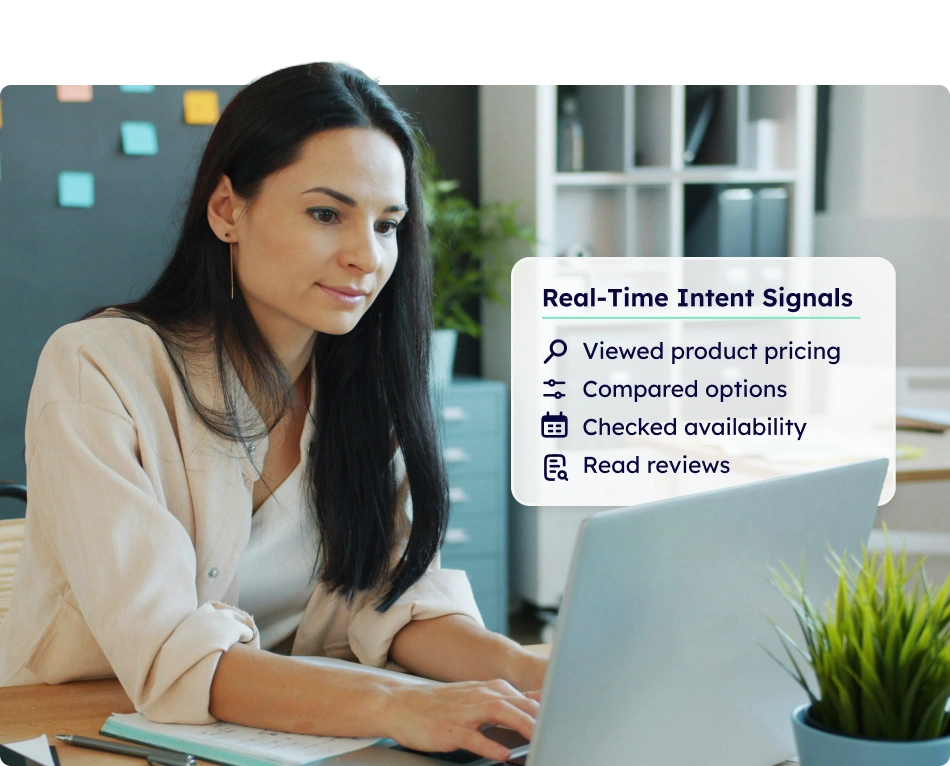


Increase ROAS automatically with AI agents
Rank intent before it reaches media platforms, suppress low-value audiences, and let AI agents continuously reallocate spend toward active demand.

Lower CPA across channels without manual optimization
Engage consistent, high-value audiences across paid, owned, and onsite channels, while agentic optimization boosts performance across every touchpoint.

Accelerate time to value with autonomous activation
Activate and scale lookalike strategies faster than ever before through no-copy data sharing via Databricks Delta Sharing.
Unify Intent in Your Warehouse.
Let AI Agents Orchestrate Growth.
Move at the Speed of Today's Demand.
Turn customer interactions into intent predictions
Capture what customers tell you and how they behave, then automatically feed that into your warehouse.
Identify which audiences are most likely to convert and prioritize them for targeting.
Prioritize intent before it reaches media platforms
Rank audiences in Databricks before activation.
Autonomously coordinate activation and spend across channels to reduce waste and maximize conversion lift.
Continuously shift spend as intent changes
Adjust activation and budget dynamically as intent updates in Databricks.
Coordinate spend across channels without copying data, so optimization keeps pace with real customer behavior.

Where ambitious
brands find their edge


“Using BlueConic segments, compared to traditional Meta audiences, we have reduced CPA by 50% and increased ROAS by 25%, despite reducing our retargeting budget by 20%.”
Stefanie Terra
Digital Marketing & Ecommerce Manager
Common questions
How is intent modeling done in the warehouse?
Intent modeling is done directly in your data warehouse, such as Databricks, using your first-party customer data. As new customer interactions occur, those updates feed into the warehouse, so intent predictions stay current.
How is BlueConic Intent-Based Targeting different from Meta or Google intent argeting?
Intent-Based Targeting with BlueConic uses intent ranked in your data warehouse before audiences are activated. Meta and Google generate intent signals inside their own platforms, while intent-based media targeting applies the same warehouse-ranked intent consistently across all paid channels.
How do BlueConic AI agents optimize spend across channels?
BlueConic AI agents optimize spend by continuously adjusting activation and budget based on live performance and updated intent. As results change, agents shift spend across channels to reduce waste and improve conversion efficiency.
How does zero-copy architecture reduce latency and cost?
Zero-copy architecture reduces latency and cost by using data directly in your warehouse instead of moving or duplicating it. This eliminates data sync delays and lowers storage and processing costs while keeping targeting up to date.
What is intent-based targeting?
Intent-based targeting is a marketing approach that identifies people actively researching a topic, product, or solution based on real behavioral signals (like search queries, content engagement, and comparison activity) so you can reach in-market buyers with messaging that’s timely, relevant, and more likely to convert.
When should I use the Intent-Based Targeting Growth Play?
Use the Intent-Based Targeting Growth Play when you want to prioritize high-intent audiences before media spend is committed and dynamically shift budget as intent changes—helping increase ROAS, lower CPA, and reduce wasted spend across paid channels using warehouse-ranked intent.
How does this type of Intent-Based Targeting improve ROAS?
Intent-Based Targeting improves ROAS by ranking high-converting audiences in your data warehouse before activation, suppressing low-intent segments, and dynamically reallocating spend across channels as intent changes—so more budget goes toward audiences most likely to convert.
.webp)
Let's Make every media dollar move with demand. Autonomously.
.webp)
%20(1).webp)