
The Marketer's Guide to Customer Data Analytics
Learn what customer data analytics is, how it works, and how teams use customer insights to guide decisions, improve experiences, and drive measurable business results.

Customer data is collected from countless sources, but it rarely provides clear insight on its own. Teams see clicks, page views, purchases, and engagement metrics collected from different tools, but often struggle to understand what customers actually want or what to do next. Customer data analytics connects that data to behaviors and outcomes, turning everyday interactions into actionable insights.
Key takeaways
- Customer data analytics explains not just what customers do, but why their behavior changes over time.
- Accurate analytics depends on collecting, unifying, and maintaining high-quality customer data.
- Identity resolution and continuous profile updates are essential for understanding the full customer journey.
- Behavioral data becomes more meaningful when paired with zero-party data and customer feedback.
- Predictive analysis helps teams anticipate future behavior instead of reacting after outcomes occur.
- Analytics creates real value only when insight informs decisions and actions across teams.
What is customer data analytics?
Customer data analytics is the process of analyzing customer data to understand how people interact with a business. Customer data analysis looks at customer behavior, patterns, and outcomes across various touchpoints to explain what customers do, what influences their decisions, and how user behaviors connect to business results.
Rather than looking at broad channels or campaigns, customer analytics focuses on individual customer preferences and actions. The process connects data across customer touchpoints to build a continuous view of customer activity that reveals trends teams can use to guide decisions. When applied effectively, customer analytics helps teams anticipate customer needs, refine customer experiences, and improve the entire customer journey.
Why customer data analytics is important
Customer data analytics helps teams understand intent, explain behavior, and make better decisions. Instead of reacting to outcomes after the fact, teams can see patterns as they form and respond while customers are still engaged.
When teams apply customer analytics effectively, they can:
- Identify what drives conversions and engagement
- Recognize early signs of disengagement and churn
- Prioritize actions that increase customer lifetime value
- Align marketing efforts, products, and customer teams around shared insight
- Deliver more relevant customer experiences based on real user behavior
Types of customer data analytics
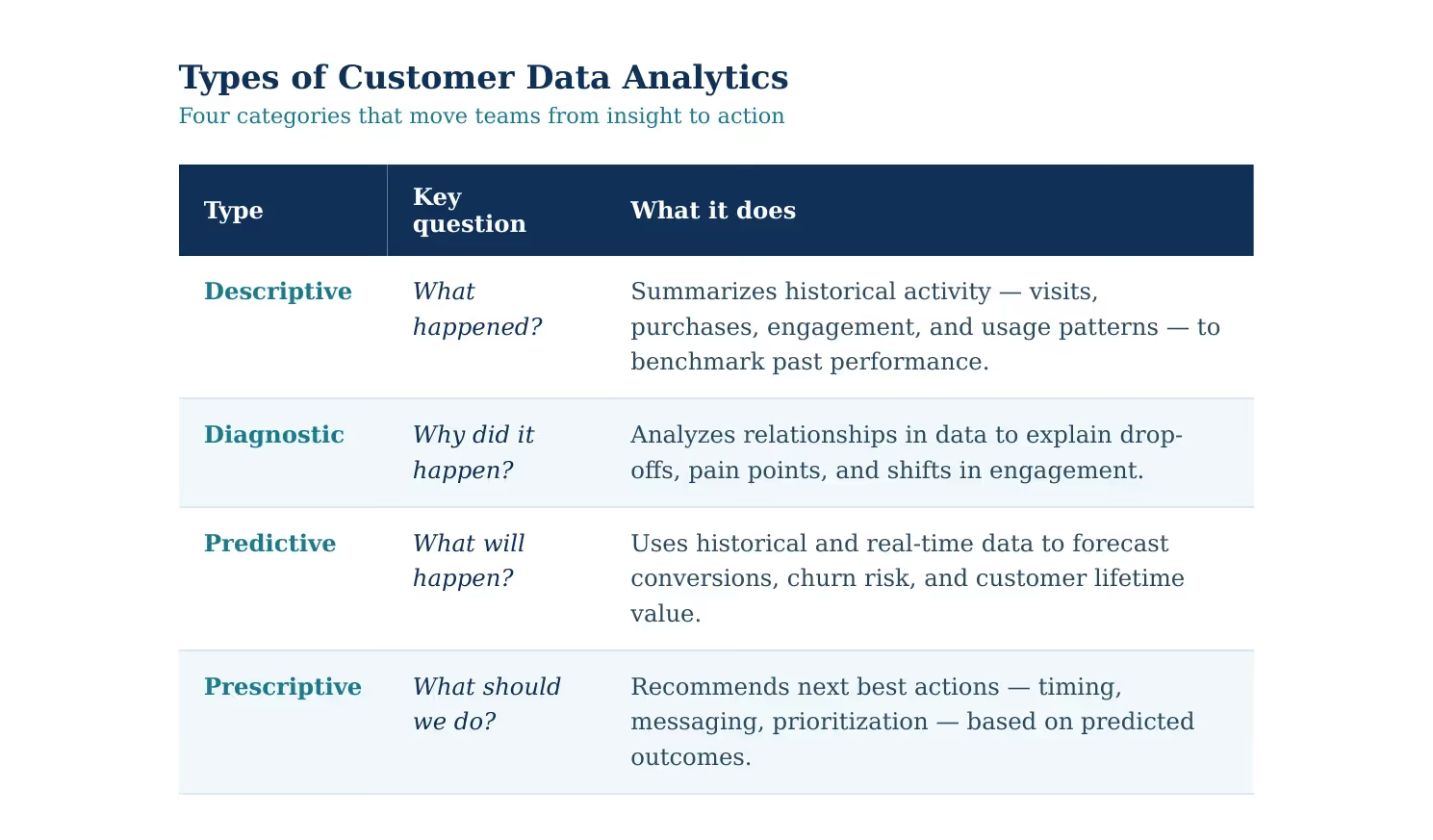
Customer data analytics generally falls into four categories: descriptive analytics, diagnostic analytics, predictive analytics, and prescriptive analytics. When used together, these categories help teams move from understanding what happened to deciding what to do next.
Descriptive customer data analytics
Descriptive analytics explains what has already happened. This type of customer analytics uses historical data to summarize activity such as visits, purchase histories, customer engagement levels, and usage patterns. Descriptive customer analytics helps understand past performance, establish benchmarks, and analyze user behavior over time.
Diagnostic customer data analytics
Diagnostic customer analytics focuses on why something happened. The process analyzes relationships within data to identify what drives specific outcomes. Teams use diagnostic analytics to understand drop-offs, identify pain points, and explain shifts in engagement by examining how different customer behaviors and attributes connect.
Predictive customer data analytics
Predictive customer analytics looks ahead by using historical and real-time customer data to anticipate future behavior. It applies models to estimate outcomes such as likelihood to convert, risk of churn, or expected customer lifetime value. With predictive insight, teams can act earlier, prioritize effort, and focus on customers who are most likely to take action.
Prescriptive customer data analytics
Prescriptive customer analytics recommends what to do next based on predicted outcomes. It combines customer behavior data and forecasting to guide decisions around timing, messaging, and next best actions. This type of customer analytics helps teams turn valuable insights into action.
Key customer data that powers analytics
Customer analytics relies on the ability to collect data from interactions and use it to understand customer behavior, preferences, and outcomes. The more complete and accurate the data, the easier it becomes to generate customer insights that reflect real needs and expectations. Effective analytics combines multiple types of customer data to create a clear view of how customers engage and how satisfied they are with the overall experience.
The most common types of customer data used in analytics include:
- Behavioral data: Captures how customers interact with websites, apps, emails, and products. This includes page views, clicks, feature usage, and engagement patterns that signal interest and intent.
- Transactional data: Records purchases, subscriptions, renewals, and order history. Transactional data helps teams understand value, frequency, and buying behavior over time.
- Profile and attribute data: Includes details such as location, preferences, account status, and customer type. These attributes provide context that helps explain differences in behavior.
- Engagement data: Tracks how customers respond across channels, including email opens, message interactions, and campaign participation. Engagement data shows which experiences resonate and where interest drops off.
- Customer feedback: Reflects customers' sentiment about their experiences, including satisfaction, expectations, and pain points. Feedback collected through customer surveys, reviews, and forms helps teams measure overall customer satisfaction to identify patterns and opportunities for improvement.
How customer data analytics works
Customer data analytics works by collecting customer data, organizing it in a usable structure, analyzing patterns, and applying insights to guide action. When teams understand how customer analytics work from end to end, they are able to make smarter business decisions based on real behavior.
.avif)
1. Customer data is collected and stored in a central system
The process begins when teams collect customer data from websites, apps, email, and product experiences. These interactions are captured as first-party signals that reflect how customers engage at different stages of the journey. A customer data platform or other customer database is used to store customer data in one place, making it available for customer analysis instead of scattered across disconnected tools.
2. Customer identities are unified
As customers return, log in, or share information, analytics systems connect anonymous and known activity into a single view of each customer. This unified profile shows how interactions unfold across channels and time. With this identity resolution process in place, customer journey mapping becomes possible, revealing how customers move from discovery to engagement to conversion.
3. Customer analysis reveals patterns and meaningful segments
Once data is unified, customer analysis focuses on identifying patterns within behavior, engagement, and value. Teams use customer analytics tools to examine frequency, timing, and sequence of actions. These insights enable customer segmentation, allowing teams to group customers based on shared behaviors, needs, or predicted value.
4. Predictive insight informs prioritization and planning
By applying predictive techniques, analytics estimates future outcomes such as likelihood to convert, churn risk, or long-term value. These insights guide prioritization and planning in ways traditional business intelligence software cannot address on its own.
5. Insights are applied to real-world actions
Teams use customer analytics to shape personalized marketing campaigns, refine experiences, and decide where to focus effort. Applying insight directly to marketing strategies leads to better timing, more relevant messaging, and clearer decision-making.
6. Results feed back into the analytics process
Customer responses to those actions generate new data. As teams continue implementing customer analytics, outcomes flow back into the system, improving accuracy and sharpening insight. Carefully handling customer data throughout this cycle keeps analytics trusted, compliant, and effective as behavior evolves.
Metrics that matter in customer data analytics
Customer analytics becomes meaningful when teams measure outcomes that reflect real business impact. While activity metrics can describe what happened, value-based metrics explain whether analytics is driving better decisions and stronger performance. The most useful metrics connect customer behavior to revenue, retention, and business growth.
Key metrics to focus on include:
- Return on investment (ROI): Shows whether marketing and customer initiatives generate more value than they cost. ROI helps teams evaluate overall effectiveness and compare efforts across channels and campaigns.
- Return on ad spend (ROAS): Measures how much revenue paid campaigns generate relative to advertising spend. This metric helps teams assess efficiency and make informed decisions about where to invest marketing dollars.
- Customer lifetime value (CLV): Estimates the total value a customer is expected to generate over time. CLV helps teams prioritize high-value customers and evaluate the long-term impact of acquisition and engagement strategies.
- Conversion rates: Track how often customers complete desired actions such as signing up, purchasing, or upgrading. Conversion rates reveal how well experiences guide customers toward outcomes.
- Retention and churn rates: Show how effectively a business keeps customers engaged over time. These metrics highlight experience quality and signal when customers begin to disengage.
- Engagement depth and frequency: Measure how often and how meaningfully customers interact with content, products, or campaigns. Engagement metrics provide context for interpreting conversion and retention trends.
Common customer data analytics challenges
Customer data analysis offers clear benefits, but many teams struggle to realize its full value. The challenges usually stem from how customer data is collected, managed, and applied across the organization rather than from a lack of data itself.
Fragmented customer data
Customer data often lives in separate systems across marketing, sales, product, and analytics teams. When information remains siloed, teams struggle to build a complete view of customer behavior.
Delayed insights
Many analytics workflows rely on batch processing and static reporting. As a result, insights arrive after key moments have passed. When teams cannot analyze behavior as it happens, opportunities to engage or intervene are missed.
Static segmentation
Customer segments built on fixed rules or outdated snapshots fail to reflect how customers change over time. As preferences, intent, and behavior change, static segments lose accuracy and effectiveness.
Disconnect between analysis and action
Insights frequently live in dashboards, while execution happens in separate tools. When analytics does not directly inform decisions or engagement, even high-quality analysis struggles to influence real outcomes.
Customer data analytics best practices
Effective customer data analytics depends on more than tools and technology. Teams see better results when they follow consistent practices that keep data reliable, insights relevant, and decisions grounded in real behavior.
Start with clear business questions
Define what you want customer data analytics to answer before diving into dashboards or reports. Clear questions about conversion, retention, or customer value shape how data is collected, analyzed, and applied.
Prioritize zero- and first-party customer data
Focus on zero- and first-party data collected directly from customer interactions across owned channels. This data reflects real behavior, stated preferences, and clear intent, making it more reliable for analysis than third-party data.
Align teams around shared metrics
Customer data analytics works best when marketing, product, and customer teams measure success the same way. Shared definitions and consistent metrics reduce confusion and ensure insights lead to coordinated action instead of conflicting interpretations.
Keep customer data current
Update profiles and datasets as interactions occur to avoid relying on outdated snapshots. Current data keeps analytics relevant and improves confidence in the insights teams use to make decisions.
Apply insights and iterate
Apply findings to real decisions, observe outcomes, and refine your approach over time. This continuous loop helps customer analytics improve with every interaction.
From insight to action with BlueConic
Customer data analytics delivers value when insight leads directly to action. BlueConic brings customer data, analytics, and activation into one platform, allowing teams to analyze behavior and respond in real time instead of moving insight between disconnected tools.
With BlueConic, teams work from unified customer profiles that update as interactions occur. These profiles combine behavioral signals with zero-party data that customers intentionally share, giving teams a clearer view of intent.
BlueConic's capabilities include:
- Unified customer profiles: Combine behavioral, transactional, preference, feedback, and zero-party data into a single view.
- Real-time data collection: Capture customer interactions as they happen across digital experiences.
- Zero-party data capture: Collect preferences and feedback through surveys and interactive experiences.
- Advanced segmentation: Build dynamic segments based on behavior, stated preferences, and predicted value.
- Built-in activation tools: Apply insights directly to personalization and experience optimization.
- Privacy and consent management: Manage customer data responsibly and in line with customer preferences.
By connecting analytics directly to execution, BlueConic helps teams act faster, deliver more relevant experiences, and make smarter decisions grounded in real customer behavior.
Where customer data analytics starts delivering results
Customer data analytics creates real value when insight leads to action. Teams that collect, analyze, and apply customer data consistently gain a clearer understanding of behavior, intent, and opportunity. Over time, analytics becomes less about reporting past performance and more about guiding confident decisions as customer needs change.
If you want to see how customer data analytics can move from insight to execution in real time, book a demo and explore how unified customer data can drive more relevant experiences and smarter decisions across the customer journey.
Frequently asked questions
What is customer data analysis?
Customer data analysis is the process of examining customer data to understand behavior, preferences, and outcomes across touchpoints. It helps teams identify patterns, explain customer actions, and use insight to guide decisions.
What is an example of customer analytics?
An example of customer analytics is analyzing purchase history and engagement data to identify customers who are likely to churn. Teams can use this insight to adjust messaging, improve experiences, or prioritize outreach before disengagement occurs.
What are the four types of customer analytics?
The four types of customer analytics are:
- Descriptive analytics: Explains what has already happened by summarizing past customer behavior.
- Diagnostic analytics: Explains why certain outcomes occurred by identifying patterns and drivers.
- Predictive analytics: Estimates what customers are likely to do next based on historical and current data.
Prescriptive analytics: Recommends actions based on predicted outcomes to guide decision making.
