
What Is Upselling, and How Does It Boost Sales and Customer Experience?
Discover how upselling boosts sales by encouraging customers to upgrade or add-on purchases. Learn how it enhances customer experience, increases lifetime value, and strengthens loyalty when done strategically.

What is upselling? Read on for the answer, and discover the benefits of upselling as well as strategies you can use to boost sales and conversions.
Key takeaways
- Upselling is a revenue strategy that increases average order value by presenting customers with a higher-tier product, upgrade, or bundle at the point of purchase decision.
- Personalization is what separates upselling from pushing. Recommendations grounded in purchase history, browsing behavior, and declared preferences convert. Generic ones don't.
- In-session timing outperforms every other window. The closer the recommendation lands to active purchase intent, the higher the conversion rate.
- Cross-channel coordination determines whether an upsell strategy compounds or cancels itself out. The same intelligence should inform on-site, email, and paid—not operate independently in each.
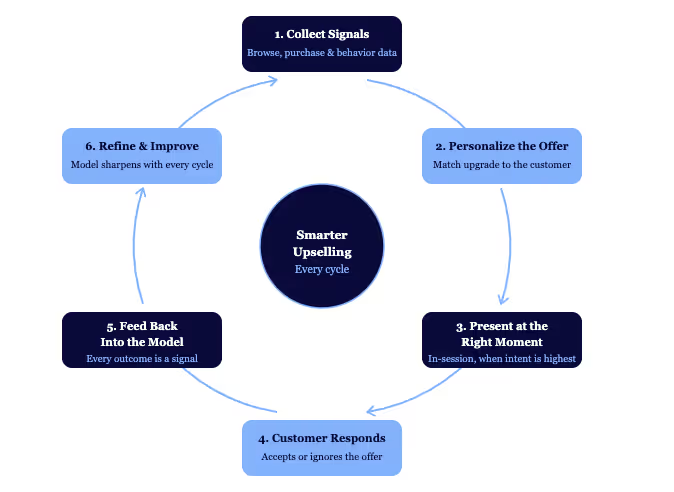
- Every recommendation outcome is a training signal. Upsell performance improves when accepted and ignored offers feed back into the decisioning model.
Businesses are constantly seeking innovative ways to increase their sales revenue and retain customers. One powerful technique has proven to be effective is upselling.
So, what is upselling?
In this comprehensive guide, you'll read about the concept of upselling and explore its numerous benefits. We'll also discuss practical strategies to implement upselling effectively, ensuring a win-win situation for both businesses and customers.
What is upselling?
Upselling is a sales strategy where a brand encourages customers to purchase a higher-priced version of a product. The primary objective of upselling is to increase the average order value and, consequently, the bottom line of the business.
At its core, upselling centers around the art of persuasion, where businesses strategically present upgrades to customers, encouraging them to spend more than they originally intended. However, successful upselling isn't just about pushing expensive products; it's about understanding and fulfilling the customer's needs to enhance their overall shopping experience.
The benefits of upselling
Before we dive into some awesome and effective upselling strategies, let's take a moment to understand all of the benefits it offers to both businesses and customers:
1. Increased sales revenue
The most obvious advantage of upselling is the potential to boost sales revenue. By enticing customers to buy more expensive versions, businesses can significantly increase their earnings.
When presented with an opportunity to upgrade to a more feature-rich version of a product, customers are more likely to see the enhanced value they'll receive for a slightly higher price or investment. This shift in perception can lead them to consider and ultimately choose the upsell offer, leading to higher revenue per sale.
2. Improved customer experience
Upselling, when done right, can cater to the specific needs and preferences of customers. By offering them upgrades, businesses can enhance their shopping experience, leading to higher customer satisfaction and loyalty.
Generic and pushy upselling attempts can lead to a negative customer experience. However, when businesses take the time to understand their customers, analyze their purchase history, and gain insights into their preferences, they can create upselling offers that are highly relevant to each individual.
By presenting customers with products or upgrades that align with their interests and previous purchases, businesses demonstrate that they genuinely value their needs, leading to a more personalized and enjoyable shopping experience.
3. Higher customer lifetime value (CLV)
Upselling contributes to increasing the CLV of a customer. When they continually find value in purchasing a more expensive version, they are more likely to remain loyal to the brand and continue buying over an extended period.
By providing upselling offers that are tailored to the specific needs and preferences of individual customers, businesses create a sense of exclusivity and personalization. This fosters a deeper emotional connection with the brand, making customers more inclined to choose the business over competitors for future purchases.
4. Stronger customer relationships
Personalized recommendations in upselling demonstrate a customer-centric approach, where businesses prioritize understanding and fulfilling the needs of individual customers.
By analyzing customer data and behavior, such as purchase history, browsing patterns, and preferences, businesses gain valuable insights into what each customer is interested in. This knowledge empowers them to offer products or upgrades that align precisely with the customer's preferences, showing that they genuinely care about their individual shopping experience.
5. Competitive advantage
Upselling, when executed skillfully, can provide e-commerce businesses with a powerful competitive advantage. It goes beyond merely increasing immediate sales; it becomes a strategic tool to create a unique selling proposition (USP) that attracts new customers and secures long-term success.
A well-executed upselling strategy is all about personalization and understanding customer preferences. By carefully analyzing customer data and behavior, businesses can tailor upselling offers that align precisely with the unique needs and interests of each customer.
8 upselling techniques
Now that we understand its importance and benefits, let's explore some effective upselling techniques to implement it successfully.
1. Know your customers and segment
Segmentation is key to delivering targeted upselling offers. Analyze customer data to understand their preferences, purchase history, and demographics. By categorizing customers into specific groups, you can tailor upselling messages to resonate with their needs and interests.
Different customer segments may respond better to different communication styles and channels. For instance, one segment may prefer email communications, while another may engage more on social media. By segmenting your audience, you can tailor your upselling messages to align with their communication preferences, ensuring optimal engagement and receptiveness to your offers.
2. Offer relevant products and upgrades
The success of upselling lies in presenting customers with offers that truly resonate with their needs and preferences. To make upselling appealing and effective, businesses must ensure that the offered products or upgrades are not only relevant but also add tangible value to the customer.
By presenting side-by-side comparisons and emphasizing the benefits of the upgrade, businesses can create a compelling case for customers to opt for the upsell, leading to increased conversions and a positive customer experience.
3. Create a sense of urgency
In the fast-paced world of e-commerce, creating a sense of urgency is a powerful psychological trigger that can spur customers to take immediate action. When effectively implemented in upselling, this tactic can significantly boost conversion rates and drive higher sales revenue.
By incorporating limited-time offers or exclusive deals, businesses can instill a feeling of urgency that motivates customers to make a purchase decision sooner rather than later.
4. Leverage social proof and testimonials
In the digital age, where online shopping is prevalent, customers rely heavily on social proof and testimonials to make informed purchase decisions. Leveraging social proof and displaying testimonials from satisfied customers who have benefited from upsell products can be a game-changer in upselling success. These testimonials serve as powerful endorsements, boosting confidence and trust in the upsell offer and increasing the likelihood of conversion.
5. Automate upselling opportunities
Implementing automation tools to identify upselling opportunities has become a valuable ally in driving efficiency and maximizing sales opportunities. When applied to upselling, automation can significantly enhance the customer journey and increase conversion rates.
By using automation tools to identify upselling opportunities and to deliver timely and relevant recommendations, businesses can leverage the power of technology to boost sales revenue and create a seamless shopping experience.
6. Personalized follow-up post-purchase
The relationship between a business and its customers doesn't end at the point of purchase; it's an ongoing journey of building trust and loyalty. One of the most effective ways to nurture this relationship and drive repeat business is through personalized follow-up post-purchase.
By reaching out to customers with tailored upgraded products that they have yet to purchase via email or their user account page, businesses demonstrate that they genuinely care about their needs and preferences. This thoughtful approach not only enhances customer satisfaction but also creates upselling opportunities that can lead to increased sales revenue and foster long-term customer loyalty.
7. Upselling during customer service interactions
Customer service interactions are not just about resolving queries or addressing issues; they also present valuable opportunities for upselling. By training your sales team to identify customer needs and offer suitable upsell options during these interactions, businesses can turn customer service into a proactive and revenue-generating channel. This strategic approach not only enhances the customer experience but also contributes to increased sales revenue and customer lifetime value.
8. Implement add-ons and cross-selling
While upselling focuses on enticing customers to upgrade to a higher-priced version of a product or service, add-ons and cross-selling offer additional dimensions to the upselling strategy. Implementing add-ons and cross-selling on product pages can significantly enhance the customer's shopping experience and increase the value they receive from their original purchase.
By showcasing complementary products or services that align with the customer's needs and preferences, businesses can create a seamless and synergistic upselling approach that not only drives higher sales revenue but also fosters long-term customer satisfaction and loyalty.
Best upselling examples
Here are 3 successful upselling examples to help guid your thinking.
Example 1: Travel
You're about to book your flight to a tropical paradise for your well-deserved vacation. After selecting your departure and arrival dates, you're presented with a list of flight options, including economy class and first-class tickets. As you're contemplating which ticket to choose, the travel booking website offers an enticing upselling opportunity. A pop-up window appears, showcasing the exclusive benefits of upgrading to a first-class ticket. The upselling opportunity includes upgrading to luxurious comfort, personalized service, and exclusive amenities.
Example 2: Shopify
You’re a new Shopify store owner, and you have just set up your online store on the platform. As you explore the app store to find helpful tools and functionalities to optimize your store's performance, you come across various apps that can improve different aspects of your business, such as marketing, inventory management, and customer support. As you navigate through the app store and select apps to install, Shopify takes the opportunity to present you with upselling suggestions that can complement your chosen app or provide added features. This upselling opportunity includes premium versions of apps.
Example 3: McDonald's
As you approach the counter at your local McDonald's restaurant to order your favorite meal, you're presented with an upselling opportunity. You're going to order the classic McDonald's Quarter Pounder with Cheese meal, which includes the burger, a side of fries, and a drink. You're prepared to place your order when the cashier offers you an upsell. "Would you like to upgrade your meal to our Deluxe Quarter Pounder with Cheese meal today? It's our most popular option!" This upselling opportunity includes a deluxe version of the burger, a bigger size fry, and a cafe beverage.
Upselling best practices
Execution determines whether an upsell drives incremental revenue or gets ignored. The difference comes down to signal quality, timing, and coordination across channels. These practices build that foundation:
Know the purchase signal before you act
Behavioral data like browsing depth, category affinity, cart contents, prior transactions tells you what a customer actually wants. Act on that, not assumptions.
Right-size the incentive
Not every upsell needs a discount. Match the offer to the customer's price sensitivity and the margin you're protecting. A bundle at full price beats a discounted upgrade that trains customers to wait.
Coordinate across channels
If a customer ignores the on-site recommendation, the follow-up shouldn't be a duplicate. Email, push, and on-site should carry the same intelligence — not the same message.
Time it to the decision moment
In-session is the highest-conversion window. The closer the recommendation lands to the moment of purchase intent, the less friction between the offer and the order.
Close the loop
Every accepted or ignored recommendation is a signal. Feed it back into the model. Upsell performance compounds when the system learns what actually drives AOV versus what gets ignored.
Common upselling mistakes to avoid
A few patterns consistently suppress upsell performance, and they're absoutely correctable. Identifying them early protects margin, improves conversion, and keeps the customer experience intact.
1. Blanket discounts on every upsell
Margin erosion compounds fast. If the customer would have bought the upgrade anyway, you've just subsidized a decision they'd already made.
2. Recommending irrelevant products
A cross-sell that doesn't match the customer's purchase history or declared preferences is just noise. Noise reduces conversion and erodes trust.
3. Acting on stale data
A reorder reminder that fires on a fixed 30-day schedule ignores individual consumption patterns. A customer who already reordered last week doesn't need the push. One who's overdue by two weeks does.
4. Activating in one channel and ignoring the others
An on-site recommendation that doesn't inform the email follow-up, or an email offer that duplicates what the customer just declined on-site, signals a disconnected stack — and produces inconsistent results.
5. No suppression on purchase
Continuing to serve upsell and recovery messages after a customer converts wastes spend and damages the experience. Suppression needs to operate at the profile level, not the channel level.
Ready to move beyond generic upsell rules?
BlueConic's Smart Replenishment & Upselling uses real-time purchase signals and agentic decisioning to identify the right upgrade or bundle for every customer—at exactly the moment they're ready to reorder.
No fixed schedules. No margin-eroding blanket discounts. Just incremental AOV and a model that improves with every repurchase cycle.
See how it works.
Frequently asked questions
What is upselling in ecommerce?
Upselling in ecommerce is the practice of presenting customers with a higher-tier product, upgrade, or bundle during the online purchase journey. The goal is to increase average order value by matching the customer to a better version of what they already intend to buy — based on browsing behavior, purchase history, and real-time purchase signals.
What is upselling in retail?
Upselling in retail is when a seller recommends a premium or upgraded version of a product at the point of sale. In physical retail, this happens through trained sales interactions. In digital retail, it's delivered through personalized recommendations, on-site messaging, and coordinated follow-up across channels.
What is the difference between upselling and cross-selling?
The difference between upselling and cross-selling is upselling moves a customer to a higher-value version of the product they're already considering, while cross-selling adds complementary products to the order. Both increase AOV, but upselling targets upgrade intent while cross-selling expands basket size through product adjacency.
What is cart upselling?
Cart upselling is the practice of presenting upgrade or add-on recommendations at the cart or checkout stage, when purchase intent is highest. Effective cart upselling uses real-time cart contents, product affinity data, and price sensitivity signals to surface the offer most likely to increase order value without disrupting conversion.
