
What Is Identity Resolution and Why Is It Important?
Learn how identity resolution connects customer data across channels, improves profile accuracy, and strengthens personalization and engagement for marketing teams.

Key takeaways
- Identity resolution connects scattered data to show whether interactions belong to the same person.
- Accurate profiles depend on strong first-party and zero-party data as third-party cookies fade.
- Unified customer profiles improve personalization, engagement, and long-term understanding.
- Data quality issues, duplicates, and privacy rules are the most common challenges to manage.
- For a deeper look at how to implement this approach, explore the full identity resolution solution guide.
Most organizations know far less about their customers than they think. With interactions scattered across many different devices and channels, the information rarely connects in a meaningful way. Identity resolution closes that gap and reveals the person behind those scattered data points. It provides marketing teams a dependable way to understand who they are engaging with, strengthening every decision and the overall strategy.
What is identity resolution?
Identity resolution connects customer data that appears across digital and offline channels, and determines whether those scattered details belong to the same person. Organizations often collect information through forms, emails, loyalty programs, browsing activity, and other touchpoints, but without identity resolution, this process creates multiple customer records that describe only part of an individual.
Identity resolution brings these fragments together and links the customer identifiers attached to each interaction. The result is a unified customer profile that updates as new information becomes available. This comprehensive view provides teams with a clearer understanding of the customer behind every action, strengthening a company's marketing efforts.
Deterministic identity resolution vs. probabilistic identity resolution
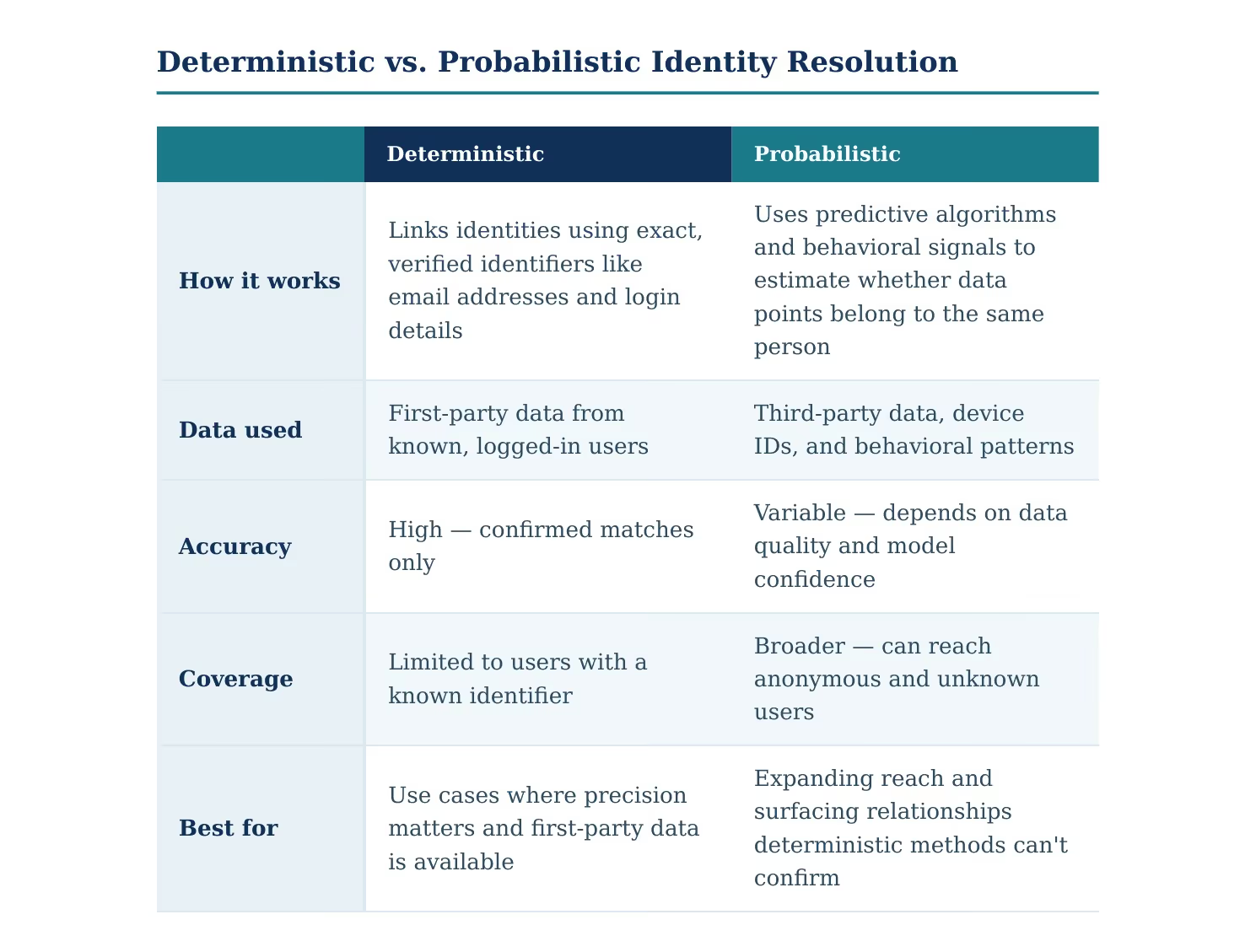
There are two different methods of customer identity resolution. One relies on verified information to confirm a match, while the other uses behavioral patterns to estimate whether different data points belong to the same person.
Deterministic identity resolution
Deterministic identity resolution uses a deterministic matching process that links customer information through exact identifiers found in first-party data. For example, email addresses and login details often remain consistent across channels and devices. As a result, these details become a reliable source for determining a single customer identity from multiple touchpoints with a high level of data accuracy.
Probabilistic identity resolution
Probabilistic identity resolution uses probabilistic matching when exact identifiers are missing. Probabilistic matching utilizes predictive algorithms to examine consumer behavior, multiple device IDs, and other signals to estimate whether multiple interactions connect. Third-party data is often used with probabilistic matching models, but the outcome depends significantly on the quality of the data. While probabilistic matching is less certain than the deterministic alternative, it can often uncover relationships that deterministic matching cannot confirm.
Why identity resolution in marketing is important
Identity resolution enables marketing teams to make sense of customer data that rarely arrives in one place. Scattered details often lead to inaccurate customer profiles, which affects every aspect of the customer experience. The identity resolution process brings those pieces together and shows whether they belong to the same person, even when the only shared detail is the same email address or a trail of activity across multiple channels.
A growing reliance on first-party data has pushed this work to the forefront. Third-party cookies and anonymous device IDs reveal less about customer behavior than they once did, so identity resolution solutions offer organizations a better way to understand individuals.
Identity resolution also helps reduce data silos and strengthens data governance. Sales and marketing teams gain customer insights they can trust, which leads to marketing efforts shaped by real behavior rather than scattered or incomplete records.
The benefits of identity resolution
Identity resolution turns scattered customer data into something far more useful. When teams can see how the same user appears across different moments or device IDs, the entire picture becomes easier to understand and act on.
More accurate customer profiles
Customer information often lands in separate systems, and each system tells a different story. Identity resolution pulls all the data from emails, forms, loyalty activity, and browsing together in unified customer profiles instead of disconnected records. A customer data platform (CDP) then organizes this connected customer data into a usable form.
Better customer engagement and personalization
A fuller view of the customer helps identity resolution logic spot patterns that would otherwise go unnoticed. With these complete user profiles and the high-quality data that made them possible, marketers can make outreach feel more relevant because it reflects how people actually behave.
Stronger insights for long-term relationships
A unified customer view shows how customer interactions and interests shift over time. Marketing teams that utilize identity resolution can develop a clearer understanding of these interests and what drives hesitation, leading to marketing campaigns that grow alongside customer relationships.
Improved cross-channel experiences
Customers interact with brands across numerous channels, including websites, in-store environments, and mobile apps. While this level of engagement is good for a brand, these moments can be disconnected without identity resolution. Identity resolution brings these touchpoints together, so the customer journey feels more consistent. Teams can respond to real behavior across channels, since they no longer need to guess whether separate interactions come from the same user.
How the identity resolution process works
With so much customer data coming from various sources, an identity resolution platform is essential for creating a clear view of the customer. But how exactly does the process work?
Effective identity resolution begins with the information organizations already collect and ends with customer profiles that reflect real behavior over time.
1. Collects identity data across channels
Identity resolution works by first gathering identity data from websites, apps, and numerous other touchpoints. Zero- and first-party data, such as email addresses, IP addresses, and even offline data from in-store visits, is some of the most important data, due to its ability to identify customers across different moments. However, second- and third-party data is also collected.
2. Links identifiers to connect customer records
The next step in the identity resolution process is to match information that appears related to the same customer. Personally identifiable information is the most reliable starting point, although other identifiers help fill gaps. When multiple pieces of identity data sync up, separate customer records start to merge.
Identity graphs can be especially helpful during this stage. An identity graph is a structured map that stores the relationships between identifiers, allowing the system to understand how various data points connect to an individual. It becomes easier to see whether the activity belongs to one person or several different people.
3. Creates unified customer profiles
After the identifiers connect, the information creates customer profiles, which update as new activity details become available. A unified profile captures the customer’s ongoing behavior rather than isolated interactions. The identity graph continues to support this process by maintaining the links between identifiers as customers browse, purchase, or interact across various touchpoints. Effective identity resolution refines these profiles over time, creating a more accurate view of the customer and a more informed approach for analysis, personalization, and long-term engagement.
Common identity resolution problems and how to avoid them
While identity resolution is a powerful tool for marketers, it isn't without its potential issues. Several challenges can surface during everyday data collection, and these issues affect the reliability of the process. Fortunately, these problems can be avoided.
Data quality issues
Identity resolution depends on accurate data, but many organizations struggle with incomplete fields, inconsistent formatting, or outdated values. These problems make matching less reliable and can create gaps in customer profiles. Regular data cleaning, standardized formatting rules, and routine validation checks can prevent data quality issues from disrupting the process.
Duplicate data
Duplicate data is one of the most common problems in identity resolution. A single individual may show up in systems under different email variations, a shortened name, or an account created through a mobile ad. These duplicates split the customer history, making real behavior harder to interpret. Deduplication tools, consistent form requirements, and rules that flag suspicious variations help reduce the number of duplicates before they reach customer profiles.
Fading signals from third-party cookies
As third-party cookies lose their value, identity resolution becomes more challenging for teams that rely on them. These cookies once offered clues that tied behaviors together, but they now provide limited insight. Shifting toward zero-party and first-party identifiers provides a more reliable approach to data collection and helps the identity resolution process remain accurate.
Privacy Regulations
Privacy regulations influence how identity data can be collected and used. Consent requirements, retention limits, and regional rules all affect what organizations can store. When these guidelines are unclear or ignored, identity resolution becomes unreliable and may even fall out of compliance. Centralizing consent management and reviewing data collection practices against current privacy regulations helps keep the identity resolution process both accurate and responsible.
How BlueConic helps with identity resolution
BlueConic gives organizations a clearer and more adaptable way to understand their customers. Instead of trying to piece together scattered records, teams gain a unified view that updates as people move between channels. The platform makes identity resolution feel approachable while giving marketers the structure they need to act with confidence.
With BlueConic, marketers can:
- Create real-time profiles that update as customers browse, purchase, or engage.
- Gather valuable zero-party and first-party information through Experiences.
- Build and activate audiences whenever needed using a marketer-friendly interface.
- Shape personalized moments that adjust to each customer’s current interests.
- Handle privacy and consent in a way that keeps responsible data collection straightforward.
Together, these capabilities help organizations turn identity resolution into a reliable tool for personalization, engagement, and long-term growth.
Get started with identity resolution today
Identity resolution opens the door to a much clearer understanding of your customers. Instead of sorting through disconnected details, teams can see how people interact across channels and what those moments reveal about their interests. Marketing starts to feel more intuitive, customer experiences become smoother, and teams can react with far more confidence because they’re working from real behavior, not guesswork.
As first-party and zero-party data become more important, identity resolution becomes an effective way to keep customers connected and relationships moving forward. Ready to see it in action? Book a demo and discover how BlueConic's Customer Growth Engine can bring the benefits of identity resolution to your team.
Frequently asked questions
Is identity resolution legal?
Yes. Identity resolution is legal when organizations collect data with proper consent, follow privacy regulations, and use the information in ways that align with stated policies.
What is the difference between identity resolution and entity resolution?
Identity resolution focuses on connecting data tied to a single person. Entity resolution connects data related to non-person entities such as households, accounts, or devices.
What is identity resolution in a CDP?
In a CDP, identity resolution links identifiers and behaviors from multiple sources to create a unified customer profile that updates as new data arrives.
