
A Guide to Gamification Marketing: Definition, Benefits, and 5 Interactive Ideas to Gamify Your Marketing Efforts
Discover how gamification works in marketing, with interactive ideas, examples, and best practices for collecting useful customer data.

Key takeaways
- Gamification helps brands turn routine marketing interactions into more engaging experiences that encourage participation, data sharing, and repeat engagement.
- Interactive tactics like quizzes, spin-to-win offers, scavenger hunts, photo contests, and challenges can help brands capture attention while learning more about customer preferences.
- Gamified campaigns can support several goals at once, including stronger brand awareness, higher engagement, more user-generated content, and increased conversions.
- The best gamification strategies are simple to understand, genuinely fun to complete, and clearly connected to the brand experience or customer journey.
- Customer data collected through gamified experiences becomes more valuable when brands can unify it into customer profiles and use it to personalize future marketing campaigns.
If you are an eCommerce brand – or a digital brand operating in any other space – you are seriously missing out if you’re not using gamification in your marketing strategy. Gamification in marketing has proven time and again to be a winning (no pun intended!) tool to achieve better brand exposure, engage with your customers, and close more sales.
Are you interested in finding out more about this hot topic? Then, our guide right here is an essential read. Let’s jump right in!
What Is gamification in marketing?
While you might have heard about using gamification strategies to up employee productivity, commitment, and satisfaction (especially in the context of an online web conference), you might be brand-new to the concept of gamification in marketing.
However, the idea is very similar: applying gamification to your marketing strategies simply means adding elements from games to your campaigns, in order to achieve a range of benefits.
How do you gamify marketing?
When we talk about “gamification elements”, we refer to anything from competitions, scavenger hunts, prizes, rewards, chances, and more.
When it comes to marketing, you can gamify lots of different areas, including advertising, referrals, and affiliate programs. In the sports betting world, gamifying online betting sites is another great way to make betting more dynamic and engaging for users. Learn about gamification of sports betting here.
Gamification in email marketing is possible, too, as well as adding gamification elements to the shopping and customer experience.
Whichever type of gamification you incorporate into your marketing strategy, one thing is for sure: you are going to want to include great prizes at the end, as well as make the interaction itself as fun, compelling, and memorable as possible (creating a great landing page can help immensely, by the way).
Only by doing so, in fact, will more and more people choose to join in your “games”, thus enabling you to reap the amazing benefits that gamification in marketing can bring.
Speaking of benefits, let’s now take a look at some of the best things you can expect to achieve through gamification in marketing.
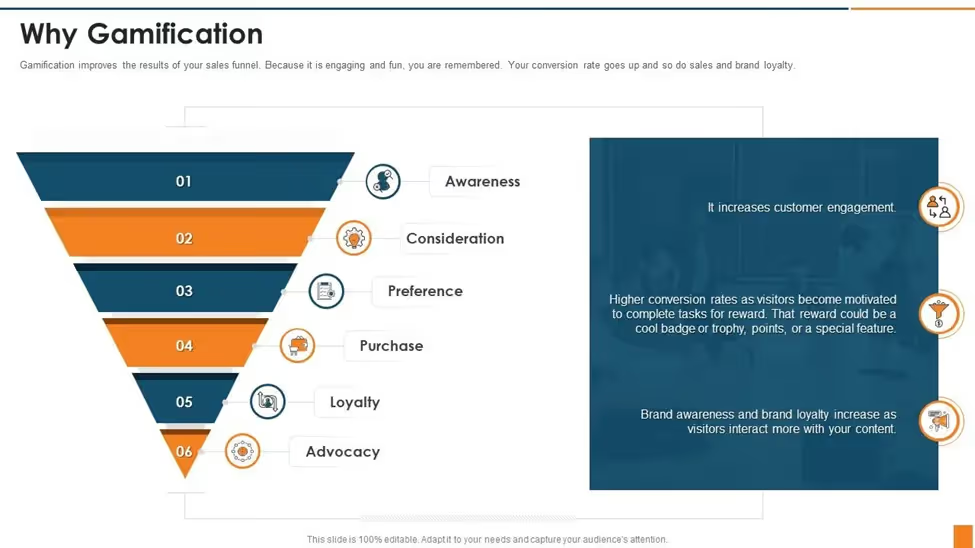
Image Sourced from slideteam.net
Why gamification marketing works
Gamification marketing works because it taps into natural behaviors that make people want to participate, complete tasks, and see what happens next. The right experience can make a simple brand interaction feel more like a choice, challenge, or reward.
A few key factors drive that response:
- Curiosity: Quizzes, games, and challenges create a sense of anticipation by encouraging customers to discover an answer, result, score, or recommendation.
- Progress: Features like points, levels, badges, and completion bars give customers a clear path forward and make each step feel purposeful.
- Reward: Discounts, exclusive content, loyalty points, or personalized results give customers a reason to engage beyond the interaction itself.
- Competition: Leaderboards, contests, and challenges can motivate customers to participate, improve their score, or compare results with others.
- Personal relevance: Experiences that respond to a customer’s choices, preferences, or goals feel more tailored than static content, which can make the interaction feel more worthwhile.
What types of data should you collect from gamified experiences?
Gamified experiences work best when they collect data that helps you understand the customer and improve the next interaction. The goal is not to ask for as much information as possible, but to capture details that can support more relevant personalization, segmentation, and follow-up.
Useful data points may include:
- Preferences: Product styles, content topics, communication preferences, favorite categories, or preferred shopping experiences.
- Interests: Hobbies, goals, lifestyle details, or subjects the customer wants to learn more about.
- Purchase intent: Whether someone is browsing, comparing options, ready to buy, or looking for a specific type of product or service.
- Needs and challenges: Pain points, goals, obstacles, or problems the customer wants help solving.
- Lifecycle stage: Whether someone is a new visitor, first-time buyer, repeat customer, loyal customer, or at risk of disengaging.
- Product or service fit: Answers that help match customers with the right recommendation, offer, resource, or next step.
- Engagement signals: Quiz results, game completions, contest entries, reward redemptions, clicks, and other actions that show how customers interact with the experience.
- Consent and communication preferences: Permission to follow up, preferred channels, and topics the customer wants to hear about.
The benefits of marketing gamification
There can be dozens of advantages to marketing gamification that can help your business achieve great results. Here, we are going to look at five of the big ones.
1. Gather data and know your customers better
First and foremost, a well-thought-out gamification campaign can help you get to know your customers better by collecting important data about them, their preferences, their needs, and their expectations.
Games, in fact, are a wonderful way to explore human behavior in a fun, safe, and playful space, which will prove invaluable if you are looking to nurture your existing customers as well as expand your customer base.
2. Enhance brand awareness
Another important benefit that gamification can generate is an enhancement in your brand awareness. Concepts like trivia, quizzes, competitions, scavenger hunts, and more are, in fact, effective ways to encourage people to get to know your brand and the products or services it offers.
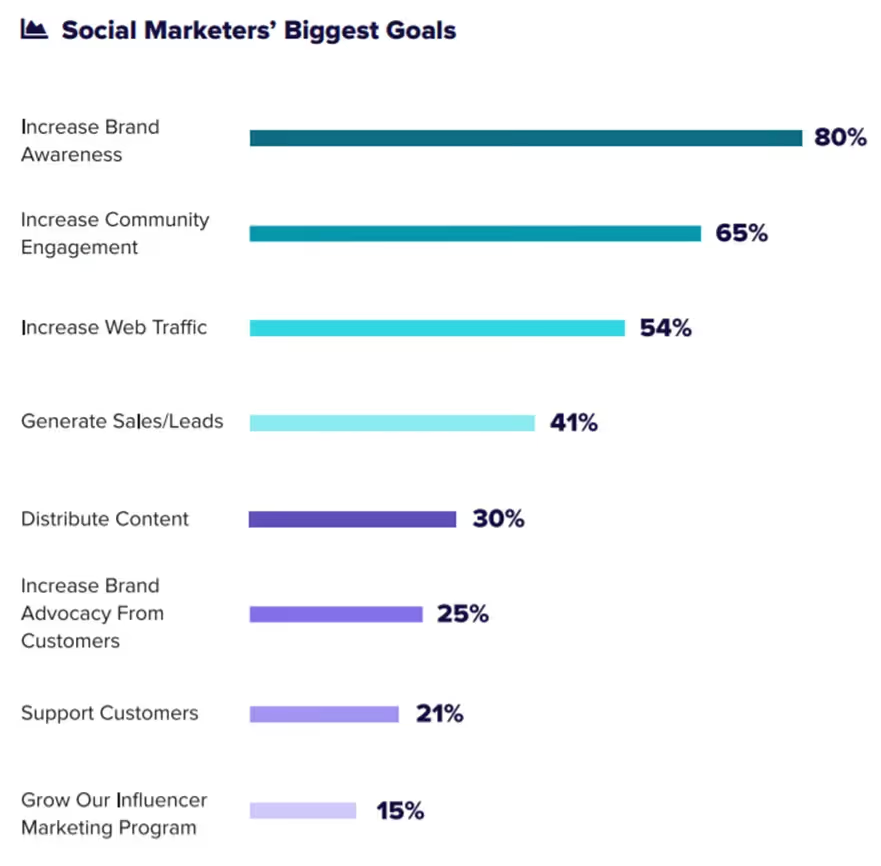
Image Sourced from compose.ly
3. Spark your customers’ attention
Following up on the previous benefit, it’s also important to mention that gamification in marketing is great at attracting your customers’ attention. The fun, interactive element that you add to your marketing communications through gamification can be decisive in making your brand stand out to customers.
4. Boost engagement
Because gamification is based upon interactive elements working together to spur an individual to take a specific action, a solid gamification campaign has the potential to boost customer engagement and, as a result, increase conversion rates.
You can still, of course, use a CSAT or NPS score to determine your customers’ satisfaction and engagement rates, but adding that extra interactive element can truly elevate the entire experience.
5. Turn UGC into a profitable asset
Last but not least, gamification is fantastic at helping you turn user-generated content (UGC) into a valuable, compelling, money-making asset for your brand. Through gamification, you can use content such as customer photos, blogs, videos, social media, and more to inspire others, generate momentum, and increase sales.
At the simplest level, encouraging users to submit content is a great way to generate unique marketing assets, specific to your brand, that you won't have to pay for. Marketing campaigns that UGC also have the added benefit of encouraging customers to promote, and endorse, your brand themselves. You can also then use these products to promote your brand in other ways such as through influencer brand placements.
Five marketing gamification ideas for your business
Now, let’s find out what the most popular and successful marketing gamification ideas are, regardless of whether you sell skincare products, VoIP for enterprises, clothing apparel, healthy food, or anything else.
1. Spin the wheel
Is there anything more classic in the world of gaming than the good, old prize wheel? This is such a much-loved and effective option that more and more brands are incorporating a digital version of it into their gamification marketing strategies.
The idea and execution are both extremely simple. You create a multi-colored wheel featuring different segments, and assign a specific prize to each segment. Then, either through your website, landing page, social media, or email, you encourage your customers to spin the wheel and reveal a prize.
2. Fun scavenger hunt
One of a number of virtual event gamification options, a scavenger hunt is a fabulous way to gamify your marketing and engage your customers in a fun, simple, and playful way.
Also known as a “treasure hunt” or “Easter egg hunt”, a scavenger hunt consists of searching for hidden clues or items that reveal a gift or prize. Not only is this very easy to implement, but it also enables you to show your customers some parts of your website that are usually overlooked, thus boosting brand awareness, customer engagement, and even sales.
3. Photo competition
Photo contests are the prime example of the “gamification-meet-UGC” strategy that we mentioned earlier. Launching a photo competition involves inviting your customers or followers to take and share snaps relating to a specific topic (and, in the case of social media, accompanied by specific hashtags).
These competitions usually have a firm end date, by which all the submissions should be received and examined by you in order to proclaim the winner. Not only is this an incredibly simple and popular option when it comes to marketing gamification, but it’s also one of the most affordable ones thanks to its use of UGC.
4. Video game experiences
If you want to take your gamification game to the next level, then you should seriously consider designing and developing an actual video game. It’s not always as complicated as it sounds, although it does require a bit more coding skills and might benefit from the input and support of an expert (check out this web development proposal example).
Through the games that you develop, you can encourage customers to take specific actions, or even to consider an important career path. For example, did you know that the US Army created a war simulator game that applicants could play on the online gaming platform Steam?
This helped attract more people to join the army in a way that felt more informal and approachable. The aim of the game, quite literally, was to showcase what life in the Army was all about and, if the players like what they see, to encourage them to visit the US Army’s website to learn more about how to apply.
Does something like this feel a bit too out of reach for your small business and limited budget? No worries, you could still add actual games to your marketing without breaking the bank in the form of simple digital scratch cards, quizzes, and trivia.
Whatever game you choose to develop, remember that digital and manual testing tools are essential, in order for your gamification experience to be safe, smooth, and successful.
5. Competitions and challenges
In many cases competition is what makes a game that bit juicier and more enticing which, in turn, leads more people to want to play. So, why not add this element to your marketing gamification, too?
Take a look at what Nike did, for example. The world-famous sportswear brand teamed up with the Run Club app to encourage people to get active and healthy. Through the app, users were able to personalize their own training program based on their individual features, fitness level, and more.
Users were then able to take part in specific fitness challenges and competitions with the aim of winning badges and trophies to showcase to their peers within the running community.
Other apps in the health and wellness space have done and are doing similar, such as Fitbit and WW (the new brand name for what used to be called Weight Watchers). This type of gamification idea is fantastic at keeping your customers active, engaged, and motivated to follow your brand and, ultimately, buy your products or services.
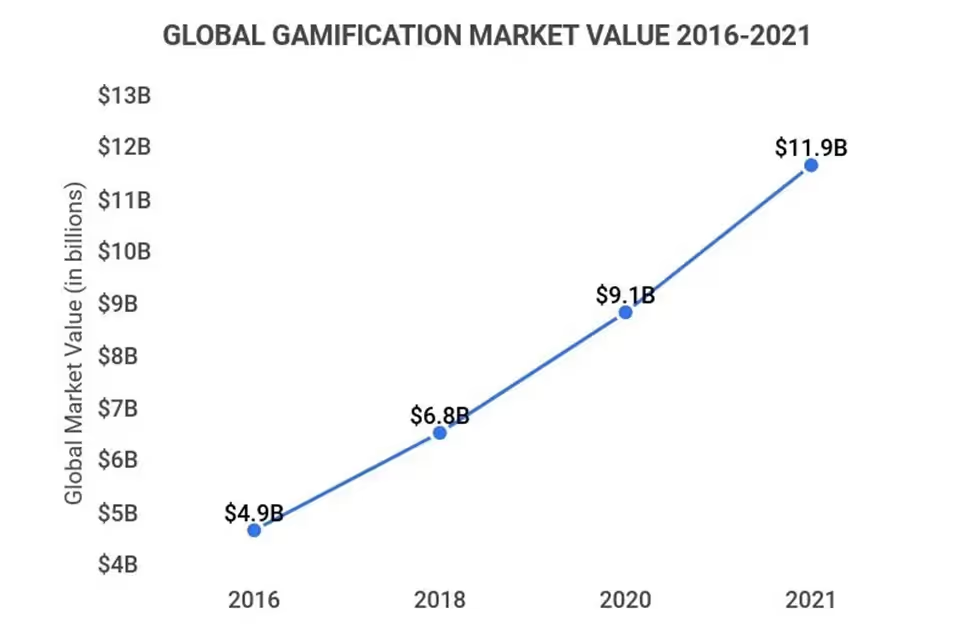
Image Sourced from Zippia.com
Best practices for gamification marketing
Gamification works best when the experience is simple, relevant, and connected to a clear marketing goal. Before adding points, prizes, or game mechanics, think about what you want customers to do and what they should get in return.
Keep the experience simple
A gamified campaign should be quick and intuitive. Customers should understand what to do, how to participate, and what they will receive without needing a long explanation. Keep quizzes, games, challenges, and contests focused so the experience feels fun instead of demanding.
Make the reward relevant
The reward should match the customer’s effort and the purpose of the campaign. Discounts, loyalty points, exclusive content, personalised recommendations, or early access can all work well when they feel connected to the experience. A relevant reward gives customers a stronger reason to participate and makes the interaction feel more worthwhile.
Ask questions that support personalization
Gamified experiences can be a useful way to learn more about customers, but the questions should serve a clear purpose. Ask about preferences, interests, goals, needs, or purchase intent when those answers can help you deliver more relevant recommendations, content, or offers.
Be transparent about data use
Customers should understand why they are being asked to share information and how it will be used. Clear messaging around consent, preferences, and follow-up can make the value exchange feel more trustworthy. This is especially important when collecting zero-party data directly from the customer.
Follow up with a personalized next step
The experience should not end once the customer completes a quiz, challenge, game, or contest. Use what they shared to recommend a product, send a relevant offer, suggest useful content, or guide them to the next action in their journey.
How BlueConic supports gamified marketing
BlueConic helps marketers connect gamified experiences to real customer data and action. With BlueConic Experiences, brands can create interactive quizzes, product finders, surveys, preference flows, and guided selling experiences that make it easier for customers to share what they want.
That can help marketing teams:
- Capture zero- and first-party data: Collect preferences, interests, needs, and intent directly from customers.
- Enrich customer profiles: Add responses from interactive experiences to unified customer profiles in BlueConic.
- Improve segmentation: Group customers based on what they share, how they engage, and where they are in the journey.
- Personalize follow-up: Use customer responses to deliver more relevant recommendations, offers, content, and messages.
- Connect engagement to activation: Turn a quiz, game, challenge, or product finder into part of a larger customer journey.
Playing the marketing gamification game and winning every time!
Gamification can be a great addition to your marketing strategy for a variety of reasons, including its ability to boost brand awareness, increase customer engagement and conversion rates, and lift your profits.
There are a lot of different ideas when it comes to implementing a gamification strategy that resonates with your brand and its customers, and our guide has hopefully offered you some good inspiration!
Frequently asked questions
How is gamification used in marketing?
Gamification is used in marketing to make brand interactions more active and engaging. Brands may use quizzes, contests, challenges, spin-to-win promotions, loyalty programmes, product finders, or interactive games to encourage participation, collect customer data, and guide customers toward a relevant next step.
What are some examples of gamification?
Common examples of gamification include personality quizzes, product recommendation quizzes, trivia games, points-based loyalty programmes, badges, leaderboards, scavenger hunts, social media challenges, photo contests, and prize wheels. These tactics can make campaigns feel more interactive while giving customers a reason to engage.
What are the disadvantages of gamification?
Gamification can feel gimmicky if it is too complicated, irrelevant, or disconnected from the customer journey. It may also lead to poor-quality data if brands ask the wrong questions or rely too heavily on incentives. The best gamified campaigns are simple, transparent, and tied to a meaningful value exchange.
