
The Best Customer Loyalty Software for E-Commerce Brands
Compare top customer loyalty software for e-commerce and learn what features matter most for retention, repeat purchases, and loyalty growth.


E-commerce brands face intense pressure to increase repeat purchases, improve customer retention, and build stronger relationships as customer acquisition costs rise and shoppers have endless online choices. To combat these rising acquisition costs, choosing the right customer loyalty software is essential. This specialized technology helps online brands reward customer activity, manage reward points or tiers, personalize loyalty experiences, and run targeted campaigns to keep existing customers engaged.
This guide compares leading loyalty systems, explores essential features, and explains how to select a platform that supports your broader loyalty strategy across digital channels.
Key takeaways
- The best e-commerce customer loyalty software helps you increase repeat purchases, improve customer retention, and turn loyalty data into more relevant customer experiences.
- Platforms like BlueConic, Yotpo, LoyaltyLion, Smile.io, and Talon.One support different loyalty needs depending on business size, program complexity, and data maturity.
- Customer loyalty software includes several types of tools, including dedicated rewards platforms, referral tools, promotion engines, and customer data platforms (CDPs) that make rewards actionable.
- Evaluation should focus on loyalty program flexibility, customer data integration, personalization, real-time activation, and usability.
What is e-commerce customer loyalty software?
E-commerce customer loyalty software is a technology category designed to help online brands encourage repeat purchases and foster long-term customer engagement. This software typically allows customers to earn points for purchases or specific digital actions, which they can later redeem for rewards like discounts, free shipping, or exclusive perks. By providing structured incentives, VIP tiers, and customer referrals, these platforms help your business build direct, value-driven relationships with existing customers.
This technology ranges from simple apps that offer a free trial to specialized, headless systems. Modern customer loyalty management software works best when integrated with your broader marketing stack, allowing you to connect transaction histories with behavioral insights.
What makes the best customer loyalty software stand out for e-commerce brands?
Modern shoppers expect customer loyalty programs to feel relevant, highly personalized, and naturally integrated with their brand interactions. Traditional, generic points-for-purchases schemes often fail to capture customer interest or motivate repeat purchases. Today's customers prefer experiential rewards and personalized incentives that reflect their unique customer preferences and purchase history.
The best loyalty management software helps you address core business challenges, including low customer retention rates, weak customer engagement, and disconnected communication channels. It also helps you overcome fragmented customer data by providing clear, actionable insights into customer behavior. With the right platform, you can prevent high customer churn and accurately measure the performance of your loyalty campaigns.
The 5 best customer loyalty software platforms for e-commerce
Finding the best customer loyalty management software requires looking beyond a standard feature checklist. Your choice should align with your team's technical resources, customer data maturity, and overall loyalty strategy. Below is a curated comparison of five leading e-commerce loyalty and enablement platforms, highlighting how they support customer lifetime growth and personalization.
1. BlueConic
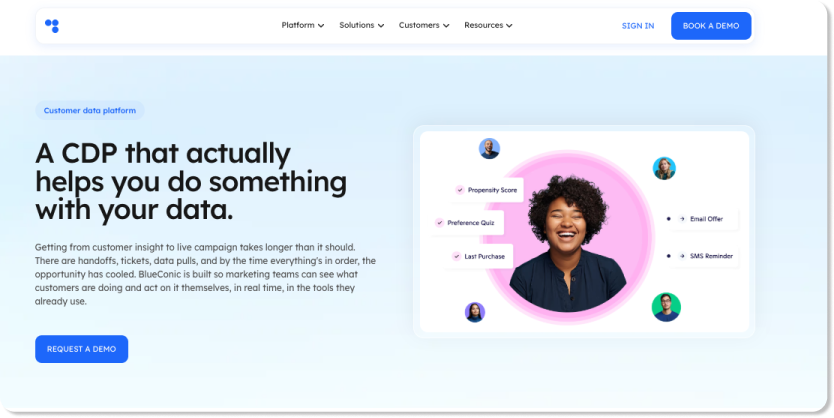
BlueConic is designed to drive and accelerate loyalty program progression. While traditional platforms excel at tracking points and managing rewards, they often struggle to turn that data into active customer behavior. BlueConic bridges this gap by pulling loyalty data (points, tier status, purchase history) directly into a real-time profile, allowing you to trigger highly targeted, contextually relevant interventions that motivate immediate action.
Instead of hiding milestones in a static account portal, BlueConic surfaces them at the exact moment a shopper is likely to convert. For instance, you can dynamically display a message like "You are only 150 points from Gold" while a customer is actively browsing a product page, or offer double points on their favorite product categories. The platform also accelerates program growth by targeting high-engagement non-members with personalized enrollment prompts, ensuring you convert casual shoppers into devoted advocates.
Key benefits and strengths:
- Loyalty program progression: Accelerates lifecycle advancement by showing tier progress, milestone celebrations, and personalized rewards in real time.
- Smart enrollment targeting: Uses behavioral listeners to identify high-potential buyers and deliver targeted on-site enrollment dialogues at peak engagement.
- Contextual rewards activation: Delivers personalized, margin-safe incentives and double-point offers based on past purchases and declared preferences.
- Ecosystem enhancement: Enriches and coordinates existing loyalty software (like Yotpo or LoyaltyLion) by combining loyalty stats with cross-channel behavioral data.
- No-code marketing control: Empowers marketing teams to launch loyalty campaigns, build segments, and trigger experiences without submitting IT requests.
2. Yotpo
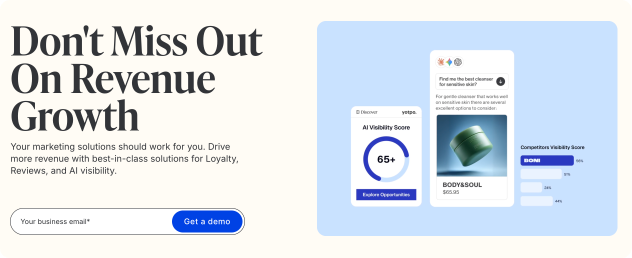
Yotpo is an e-commerce customer loyalty, referrals, and rewards platform designed to help online retail brands motivate repeat purchases and design comprehensive customer retention programs. It stands out by integrating customer loyalty programs directly with other retention marketing tools, such as customer reviews, visual marketing, and user-generated content (UGC).
For growing retail brands, Yotpo offers highly flexible point rules, customizable VIP tiers, and smooth referral features. This comprehensive suite helps you engage customers at multiple points of their journey, rewarding them not just for purchases but also for leaving reviews, following social media channels, or making customer referrals.
Key benefits and strengths:
- Integrated product suite: Connects rewards, referrals, and reviews in one centralized dashboard.
- Flexible reward structures: Offers customizable point earning and redemption rules for diverse customer interactions.
- Robust VIP tiers: Allows you to create highly visible loyalty status levels that enhance brand affinity.
- E-commerce-focused design: Built specifically for retail brands with deep integrations for major shopping platforms.
3. LoyaltyLion
LoyaltyLion is a dedicated loyalty program software built specifically for e-commerce brands looking to increase repeat purchase rates and average order values (AOV). The platform allows you to reward customers for a variety of digital actions, including purchases, account creation, reviews, and social media interactions.
LoyaltyLion emphasizes loyalty data and analytics, helping you identify your best customers and understand the financial impact of your loyalty strategy. It is particularly popular among mid-market e-commerce teams that want to turn casual shoppers into highly loyal customers through a blend of point programs, custom tier structures, and refer-a-friend incentives.
Key benefits and strengths:
- Engagement-based rewards: Motivates customers to interact with your brand beyond checkout.
- Actionable loyalty insights: Provides detailed analytics to help you measure program success and retention metrics.
- Optimized Shopify integration: Provides a seamless fit for Shopify-based businesses with fast setup.
- Customizable loyalty hubs: Allows you to design a fully branded customer-facing loyalty experience.
4. Smile.io
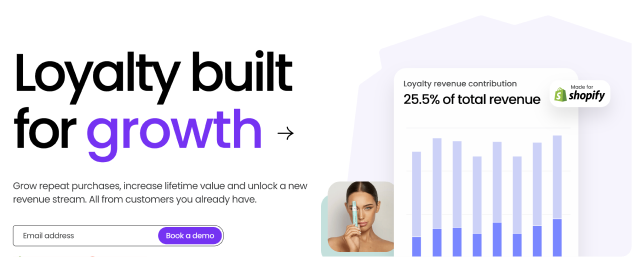
Smile.io is one of the most widely used loyalty platforms for small to midsize e-commerce businesses, particularly Shopify and BigCommerce merchants. It focuses on simplicity and speed, allowing brands to launch a points, VIP, or referral program in just a few clicks without requiring coding skills.
The platform provides an easy-to-use customer-facing loyalty hub, embedded blocks, and checkout extensions that let customers view their loyalty status and redeem rewards. If your brand wants to establish a solid customer loyalty program foundation without dealing with complex enterprise configurations, Smile.io offers a highly reliable, straightforward solution.
Key benefits and strengths:
- Fast and simple setup: Launches quickly with pre-built loyalty templates and a user-friendly interface.
- Embedded Shopify blocks: Integrates directly into Shopify checkout and customer accounts.
- Affordable points programs: Provides clear pricing structures with no hidden fees for growing businesses.
- Seamless third-party apps integrations: Connects with popular email marketing and customer service tools.
5. Talon.One
Talon.One is an enterprise-grade promotion engine and loyalty platform that supports highly sophisticated incentive management, multi-partner loyalty programs, and complex reward structures. Unlike simple e-commerce apps, Talon.One is designed for larger brands that need to manage millions of custom coupon codes, advanced discount rules, and gamified loyalty mechanics.
The platform serves as a headless promotion engine, enabling your development team to build highly customized loyalty programs across mobile apps, websites, physical stores, and modern checkout systems. It is a premier choice for omnichannel brands that require enterprise-scale performance and complex, rule-based loyalty logic.
Key benefits and strengths:
- Headless promotion logic: Delivers extreme flexibility to developer teams via robust application programming interfaces (APIs).
- Advanced rule builder: Supports complex promotion structures, paid memberships, and multi-brand loyalty campaigns.
- Real-time validation: Processes large transactional volumes with seamless performance and zero latency.
- Omnichannel reward capabilities: Unifies promotions across digital platforms and physical retail locations.
Key features to look for in e-commerce customer loyalty software
The best customer loyalty software is not just the platform with the most reward mechanics. It is the platform that helps your brand create a loyalty experience customers actually use, while giving your marketing, customer relationship management (CRM), and IT teams the data and flexibility needed to improve customer retention. When evaluating your options, focus on these five core capability areas.
1. Program design, rewards, tiers, and member experience
Most e-commerce loyalty programs need flexible reward structures that encourage repeat purchases and valuable customer behavior. Look for platforms that support points programs, VIP tiers, customer referrals, and experiential rewards like early access to product launches. The customer-facing experience should be frictionless, allowing customers to easily track their loyalty status, view their purchase history, and redeem rewards during checkout. Clear communications across mobile wallets like Apple Wallet and Google Pay can significantly enhance engagement and keep your customers engaged.
2. Customer data and unified profiles
A successful loyalty program depends on accurate customer data. Your software should not keep loyalty metrics locked in a technical silo. Instead, it must connect your loyalty data with behavioral data, purchase history, and customer preferences. Customer data platforms help you unify these disparate data points into a single, persistent customer profile. This unified profile gives your team the deep insights needed to understand what truly motivates your most loyal customers.
3. Personalization and segmentation
To drive long-term relationships, you must move beyond one-size-fits-all rewards. Your platform should support advanced customer segmentation, enabling you to group customers by purchase frequency, total spend, product interests, and predicted churn risk. This allows you to offer personalized incentives and tailored product recommendations rather than generic discounts. For instance, you can automatically send bonus points on a customer's birthday or deliver exclusive VIP rewards to your highest-value segment.
4. E-commerce, marketing, and channel integrations
Your loyalty program software must connect seamlessly with your existing marketing stack. Ensure the platform integrates seamlessly with your e-commerce platform (such as Shopify or Magento), your email service provider (ESP), and SMS marketing tools. This connectivity is vital because the customer experience happens across multiple channels. Real-time integrations ensure that when a customer earns points on your website, they receive an instant loyalty status update via email, SMS, or their customer account page.
5. Analytics, measurement, and long-term scalability
Your team needs to measure whether your loyalty strategy is actually improving key metrics like customer lifetime value, average order value, and repeat purchase rates. Choose a platform that offers clear analytics dashboards and actionable insights into customer activity. The platform you choose should scale as your data volumes increase and your retention programs become more sophisticated, ensuring seamless performance without hidden fees as your business grows.
Common mistakes to avoid when choosing customer loyalty software
Selecting the wrong loyalty platform can lead to high costs and disconnected customer experiences. As you evaluate different software solutions, consider these common pitfalls to avoid making a costly selection error.
- Choosing based only on rewards mechanics: While points and discounts are important, they do not guarantee customer loyalty if the actual program is difficult to navigate. Prioritize the user experience and overall program design.
- Over-discounting without a clear retention strategy: Offering constant price cuts can hurt your profit margins and train customers to buy only during sales. Focus on experiential rewards and personalized engagement that build authentic brand affinity.
- Ignoring customer data quality: If your loyalty system lacks access to real-time, clean customer data, your personalization efforts will suffer. Ensure your platform can easily process and activate behavioral and transactional data.
- Forgetting about omnichannel activation: Customers expect a unified experience. If their loyalty status and point balances do not update consistently across email, SMS, mobile wallets, and in-store checkouts, they will quickly become frustrated.
- Underestimating integration needs: A loyalty tool that cannot communicate with your ESP, CRM, or CDP will create isolated data silos. This makes it difficult for your marketing team to coordinate campaigns.
- Leaving data and IT teams out of the decision: Successful programs require collaborative ownership. Ensure your technical teams approve the platform's security, data management, and integration capabilities before signing a contract.
- Selecting a platform that limits future flexibility: Your business needs will evolve. Avoid platforms that lock you into rigid templates or simple point rules, and select software that supports advanced segmentation and long-term growth.
How to choose the right customer loyalty software for your e-commerce business
Finding the ideal software for your business requires a structured evaluation process. Instead of simply picking the most popular application, follow these five steps to find a solution that aligns with your operational reality and growth goals.
1. Start with your loyalty goals
Before looking at software vendors, clearly define the business outcomes you want to improve. Are you trying to increase purchase frequency, boost referral revenue, reduce churn among subscription customers, or expand your average order value? Different goals require different software strengths. For instance, a program focused on viral brand advocacy will need advanced customer referral tools and social media sharing features, while a program focused on long-term retention will need strong VIP-tier capabilities and high-value rewards.
2. Decide what type of loyalty platform you need
Not all loyalty software is built the same way. You must determine whether your business is best served by a dedicated points-and-rewards platform, a developer-friendly incentive engine, or a customer data platform that unifies loyalty data across your entire tech stack. Clarifying this distinction early helps you avoid buying a tool that is either too simple or overly complex for your team to manage.
3. Map your most important loyalty use cases
Write down exactly how your team plans to use the software on a daily basis. Consider scenarios such as running automated birthday-point campaigns, offering exclusive early access to high-tier VIPs, or triggering abandoned-cart reminders that display a customer's available reward balance. Having these concrete use cases mapped out allows you to request specific demonstrations from software vendors, ensuring the platform can actually support your intended workflows.
4. Review your e-commerce and marketing tech stack
Your customer loyalty software must integrate smoothly with the systems you already use. Map out your core technology stack, including your e-commerce platform, your email and SMS tools, and your customer service platforms. Some brands prefer a native ecosystem fit with pre-built plugins, while enterprise businesses often require flexible, API-first platforms that can handle custom data sources and legacy databases.
5. Evaluate data, personalization, and activation needs
To build lasting customer relationships, your loyalty campaigns must rely on comprehensive, real-time insights. Evaluate how easily each platform lets you gather, analyze, and act on customer behavior and preferences. If your primary goal is to run highly personalized, cross-channel retention programs powered by first-party and zero-party data, a unified customer profile solution like BlueConic will provide the necessary foundation for success. This ensures you can dynamically adjust your marketing messages based on where a shopper stands in their customer journey, turning simple rewards into a strategic engine for customer growth.
How BlueConic helps brands create more personalized loyalty experiences
BlueConic helps e-commerce brands make loyalty programs more timely, personalized, and action-oriented by connecting loyalty data to real-time customer profiles. Instead of relying on static tier emails, generic rewards, or disconnected loyalty portals, BlueConic helps teams identify which customers are closest to their next loyalty milestone, understand what is most likely to motivate them, and trigger the right prompt or incentive at the right moment. By combining loyalty status, points balance, purchase history, behavioral signals, and customer preferences in a CDP, brands can turn loyalty programs into more dynamic growth engines that increase repeat purchases, tier progression, and customer lifetime value.
BlueConic helps brands bring these loyalty moments to life in several ways:
- Tier progression prompts: Show customers when they are close to reaching the next tier and encourage them to take action with timely, personalized messaging.
- Personalized rewards and incentives: Use purchase history, preferences, tier status, and engagement data to offer rewards that feel relevant without relying on broad discounts.
- Real-time loyalty activation: Update loyalty messages and segments as customers earn points, redeem rewards, browse products, or move closer to a milestone.
- Predictive loyalty opportunities: Identify customers who are likely to advance, reorder, or reengage, then focus loyalty campaigns on the members most likely to respond.
- Cross-channel coordination: Keep loyalty prompts, rewards, and suppression rules aligned across web, email, SMS, paid media, and other channels.
- CDP-powered loyalty insights: Bring points balances, tier status, purchase history, and customer preferences into unified profiles that help teams create smarter loyalty campaigns.
With BlueConic, loyalty becomes more than a points system or rewards catalog. It becomes a data-driven customer growth strategy that helps e-commerce brands make tier advancement more visible, rewards more personal, and loyalty engagement more connected across the full customer journey.
Turn loyalty data into stronger customer relationships
The best customer loyalty software should do more than manage points and rewards. It should help your brand motivate customers to join, stay engaged, and move toward higher-value loyalty tiers.
BlueConic helps e-commerce, retail, and B2C brands activate loyalty moments with tier progression prompts, personalized milestone messaging, smart enrollment targeting, and rewards based on customer behavior, preferences, and purchase history. By connecting those loyalty features to unified customer profiles, BlueConic helps teams deliver more relevant experiences across channels and increase repeat purchases over time.
Ready to make your loyalty program more personalized and data-driven? Book a demo with BlueConic.
Frequently asked questions
What is the best customer loyalty software for e-commerce?
The best choice depends on your goals, program complexity, data needs, and e-commerce tech stack. BlueConic is a strong fit for brands looking to personalize loyalty experiences with unified customer data.
What features should e-commerce loyalty software have?
E-commerce loyalty software should support points programs, VIP tiers, reward redemption, referrals, segmentation, and integrations with your e-commerce and marketing platforms. Strong data and personalization capabilities are also important for improving retention.
How does loyalty software increase repeat purchases?
Loyalty software gives customers a reason to come back through points, perks, discounts, referrals, and VIP benefits. When connected to customer data, it can also deliver more relevant rewards and reminders based on each shopper’s behavior.
How is BlueConic different from traditional loyalty software?
Traditional loyalty tools mainly manage points, tiers, rewards, and referrals. BlueConic connects loyalty data with real-time customer profiles, helping brands personalize tier progression prompts, enrollment offers, rewards, and loyalty messages across channels.
