
A Step-by-Step Guide for Creating a Unique Value Proposition
Learn how to create a unique value proposition that reflects customer needs, highlights meaningful benefits, and sets your brand apart from competitors.


Discover how to write an effective unique value proposition to help your product or service stand out against the competition and attract the right customers.
Want to increase your conversions and make more sales? Driving those numbers up is all about winning over hearts and minds — and to do that, you need to effectively convey the value of your product or service to your customers.
That’s what a unique value proposition (UVP) is designed to do. When you create a UVP, you’re showing customers exactly how the benefits of your product meets their specific needs.
It’s not as simple as merely writing out the benefits of your offerings. Creating a UVP that converts takes research, data, and thought. Below, we’ll show you what a UVP is, how you can create one, plus a few examples of successful UVPs from different brands.
Key takeaways
- A unique value proposition tells customers why they should choose your product or service over competing options.
- Strong value propositions connect meaningful product benefits with the specific needs and pain points of the target audience.
- Researching customers and competitors can help identify benefits that are both valuable to buyers and differentiated from other options.
- The finished value proposition should be concise enough to communicate clearly across websites, ads, landing pages, and other marketing channels.
What is a unique value proposition?
A unique value proposition is a short, simple statement that has one job: It explains why customers should choose your product or service. This statement is sometimes referred to as a unique selling proposition, or USP — and it’s often confused with product descriptions or mission statements, though there are clear differences between them.
Let’s take a quick look at each so you can understand the difference:
- Mission statements: They focus on the overall company mission. For example, a company selling online courses might have a mission statement like “To help learners expand their knowledge.”
- Product descriptions: They provide the details about a product or service. In the example of online courses, these descriptions would describe what you will learn in each course.
- Unique value propositions: They describe the value that your products offer over other, similar products. Perhaps these online courses are more affordable than most, or maybe they have some other benefit that is absent among competitor offerings.
That’s what makes a unique value proposition crucial to long-term growth. You can tell your customers all about your products and your company’s mission. But in a sea of similar competitor offerings, those messages will get lost if you don’t also show your customers what gives your product or company unique value over the competition.
How do you write a good unique value proposition?
The difference between a strong value proposition and a weak one often comes down to the amount of work and market research that you put into it. If you create an off-the-cuff value proposition, there’s a good chance it will fail to land with customers or that it won’t differentiate your offerings enough to make your brand more enticing than the competition.
With that in mind, we’re going to show you how to build a great value proposition using the following five steps.
1. List the benefits of your product or service
To create an effective value proposition, the best place to start is with the basics — and that means that you need to first create a list of benefits for your product or service. However, this isn’t always as simple as it sounds, especially since it’s easy to become confused between features, advantages, and benefits.
For example, if you’re selling tablets, would you consider an extra-long battery life to be a feature or a benefit?
The easiest way to tell the difference is to do a features, advantages, and benefits (FAB) analysis. To do a FAB analysis, start by making a list of your product’s features. Next, take each feature and write out the advantages for that feature, then list the specific benefits that each advantage provides.
Let’s say that your company creates and sells tablets. Here’s what your FAB analysis for one feature would look like:
- Feature: High resolution display
- Advantage: Easier to see details clearly
- Benefits: Less eye strain, more enjoyable visual experience
The idea is to thoroughly analyze your product or service’s features to discover how those features benefit your customers because those benefits are what you’ll use to create a unique value proposition.
2. Research your target audience
The next step is to do a deep dive on your target market. Research your target audience to create buyer personas and to discover who your ideal customers might be. Don’t stop at your potential customers — be sure to also research your existing customers, too.
In particular, gather information about customer needs and pain points. The key is to zoom in on the precise things that your customers need.
For example, when surveyed, customers will often say that they purchased a tablet with longer battery life so that they can get more hours of use in between charges. However, you can dig deeper than that:
- Are customers running out of battery at school or on long flights or somewhere else they may not be able to recharge easily?
- Are they power users who are playing games or doing other demanding things that drain the battery quickly?
Specifics like these will help you craft a unique value proposition that directly addresses specific pain points.
3. Research the competition
Now it’s time to get a little intel on your competitors’ offerings. If you’re new to the tablet market, then the place to start is with Apple, Samsung, Microsoft, and other tablet manufacturers.
Examine their products inside and out — and check out their digital marketing campaigns, case studies that they’ve published, and any other asset that can shed light on features and benefits. If need be, apply the same FAB analysis method here, too.
Remember, you’re creating a unique value proposition. The details you learn here will be essential to help you differentiate between your products and the competition.
4. Connect the dots
By this point, you should have a list of benefits for your product, a good understanding of your target customers’ needs and pain points, and a list of the benefits that your competitors are leveraging in their own marketing campaigns. Now it’s time to sift through this data to see what makes your offerings unique:
- Does your product offer benefits that the competition can’t offer?
- Does your product offer superior benefits to those offered by the competition (like 16 hours of battery life compared to the competition’s 12 hours)?
- Does your target audience have unique needs or pain points that the competition’s product doesn’t address?
These types of questions will help you sort out the unique value that you can offer to the market.
5. Write and format your unique value proposition
There are a variety of ways to write your official proposition. For instance, you can create a one-pager that goes into detail about the benefits and pain relievers that your product offers, or you could create a flowchart (often called a value proposition canvas) that connects features to benefits, pain points, gaps in competitor offerings, and more.
However, one of the best ways to draft your value proposition is to simply keep it short and sweet with a headline followed by a two- to three-sentence paragraph. The headline should clearly state the benefit that your customers will receive, and the paragraph below should go into a little more detail about what you’re offering and who you’re offering it to.
This particular format works well because it translates easily to short-form content like paid ads or the header of your company’s website. That not only lets you get your unique value proposition in front of as many eyes as possible but also makes it easier for you to do A/B testing on your site’s header or split testing on ads featuring different unique value propositions.
3 Examples of unique value propositions
Now that we’ve covered the basics on how to create a unique value proposition, let’s look at how top brands do it. See below for a few great value proposition examples.
1. BlueConic
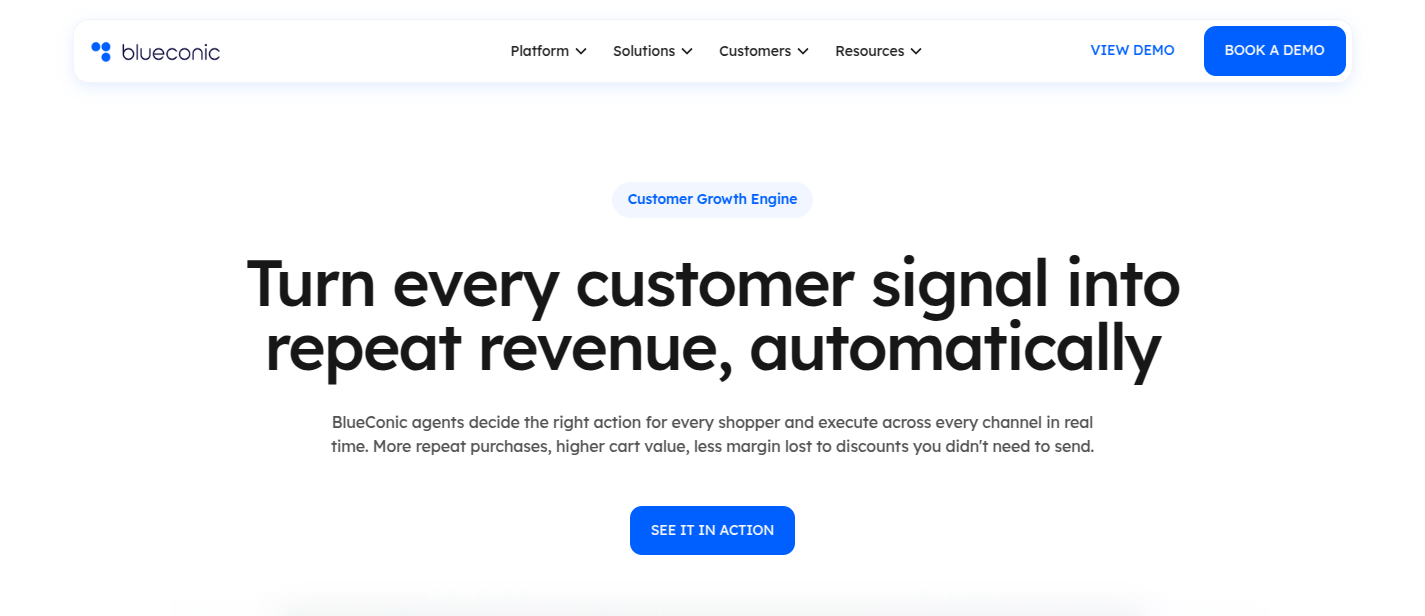
BlueConic’s homepage leads with a clear value proposition: “Turn every customer signal into repeat revenue, automatically.” Right away, that tells potential customers what they can expect to get from the platform: more revenue from the customer data and signals they already have.
The supporting copy then answers the obvious question: How does BlueConic help make that happen? Its agents determine the right action for each shopper and execute across channels in real time. The copy also gets more specific about the benefits, calling out more repeat purchases, higher cart values, and fewer unnecessary discounts.
That combination works because BlueConic doesn't lead with a long list of platform capabilities. Instead, it starts with the outcome its audience cares about most and then explains how the product helps deliver it.
2. Canva
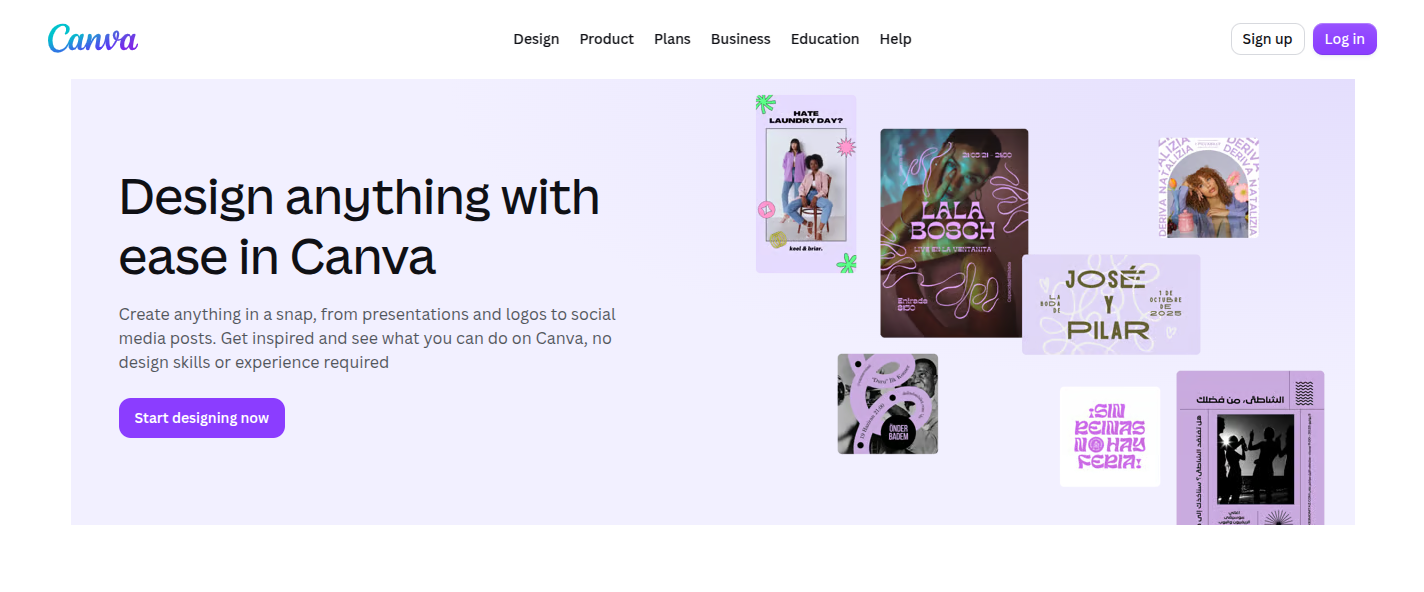
Canva takes a slightly different approach with the headline “Design anything with ease in Canva.” It’s a broad statement, but that's exactly what makes it effective. Canva serves people who need to create everything from presentations and logos to social media posts, so focusing on the ability to “design anything” speaks to a wide range of potential users.
But the real differentiator is the phrase “with ease.” Plenty of design tools can help users create those same assets. Canva's value proposition makes it clear that you don't need design skills or previous experience to do it.
The CTA to “Start designing now” wraps things up nicely. Once Canva has established that design can be easy and accessible, it gives visitors a direct way to put that promise to the test.
3. Warby Parker
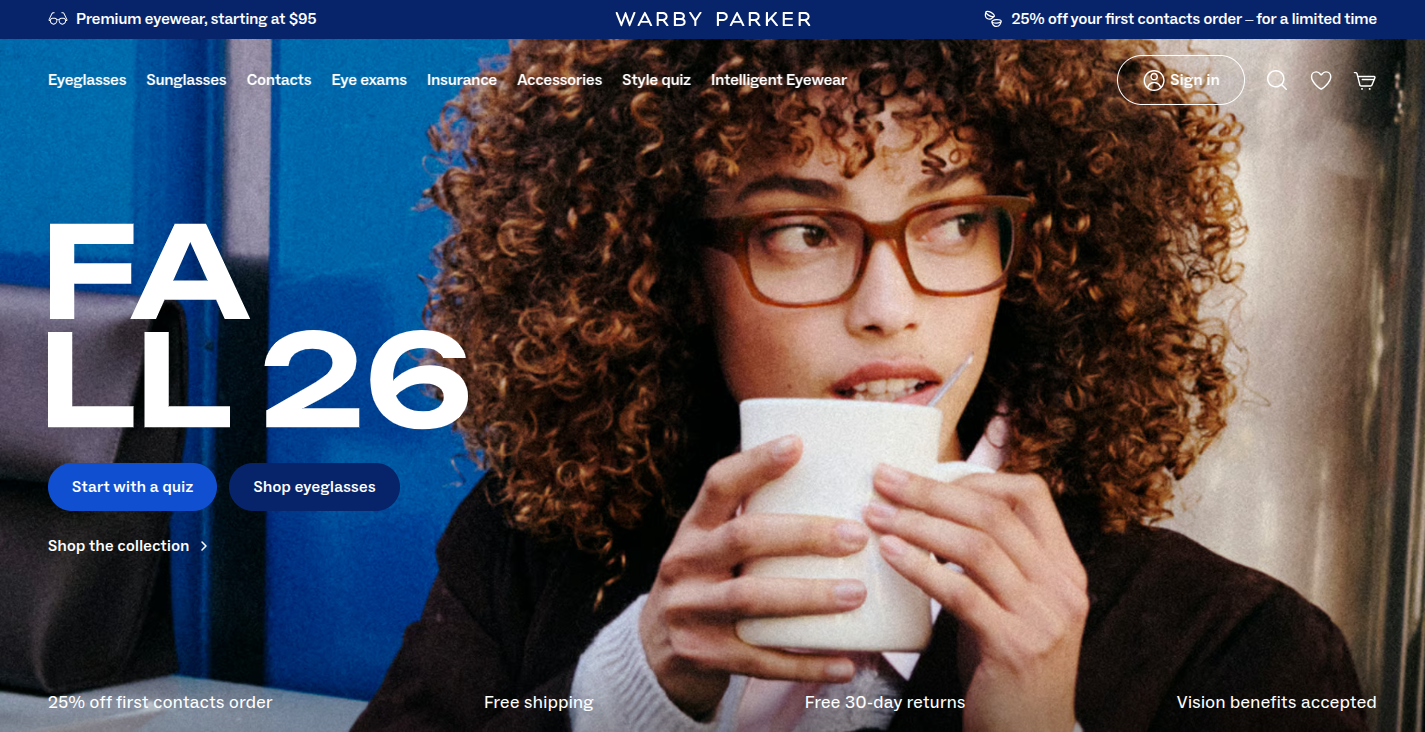
Warby Parker keeps its value proposition refreshingly straightforward: “Premium eyewear, starting at $95.” In just a few words, that tells shoppers what they’re getting and gives them an immediate sense of what it will cost.
The rest of the homepage backs that promise up. Warby Parker explains that its frames are designed in-house and include lens coatings at no extra cost, with features like impact-resistant polycarbonate lenses, anti-reflective and scratch-resistant coatings, and UV protection.
Why does that work? Eyewear shoppers may be weighing style and quality against price, and Warby Parker addresses all three without overcomplicating the message. The word “premium” establishes the quality, while the $95 starting price makes the value feel concrete.
Strengthen your unique value proposition with BlueConic Experiences
To create a value proposition that speaks to your customers, you need to understand what they actually want. BlueConic Experiences can help you get those answers directly through quizzes, product finders, preference flows, and other interactive experiences.
The responses become zero-party data that can reveal customer needs, preferences, and pain points, giving you better information to shape and refine your value proposition.
Want to learn how BlueConic Experiences can help you collect and use zero-party data? Book a demo.
Frequently asked questions
What should a unique value proposition include?
A unique value proposition should communicate the main benefit customers receive, who the product or service is intended for, and what makes the offer different from competing options. The strongest value propositions focus on benefits and customer needs rather than providing a list of product features.
How long should a unique value proposition be?
A unique value proposition should generally be concise enough for customers to understand quickly. One effective format is a short headline that communicates the primary benefit followed by a brief paragraph that adds context about the offer and its intended audience.
Where should a unique value proposition be used?
A value proposition can appear prominently on a website or landing page and can also inform messaging used in ads and other marketing campaigns. Keeping the central proposition concise makes it easier to adapt and test across different formats and customer touchpoints.
