
Beauty Brand Growth: What We Heard at Beauty Connect
Beauty brand growth lessons from Beauty Connect: how marketers can reach new shoppers, earn the second purchase, and put customer data to work.
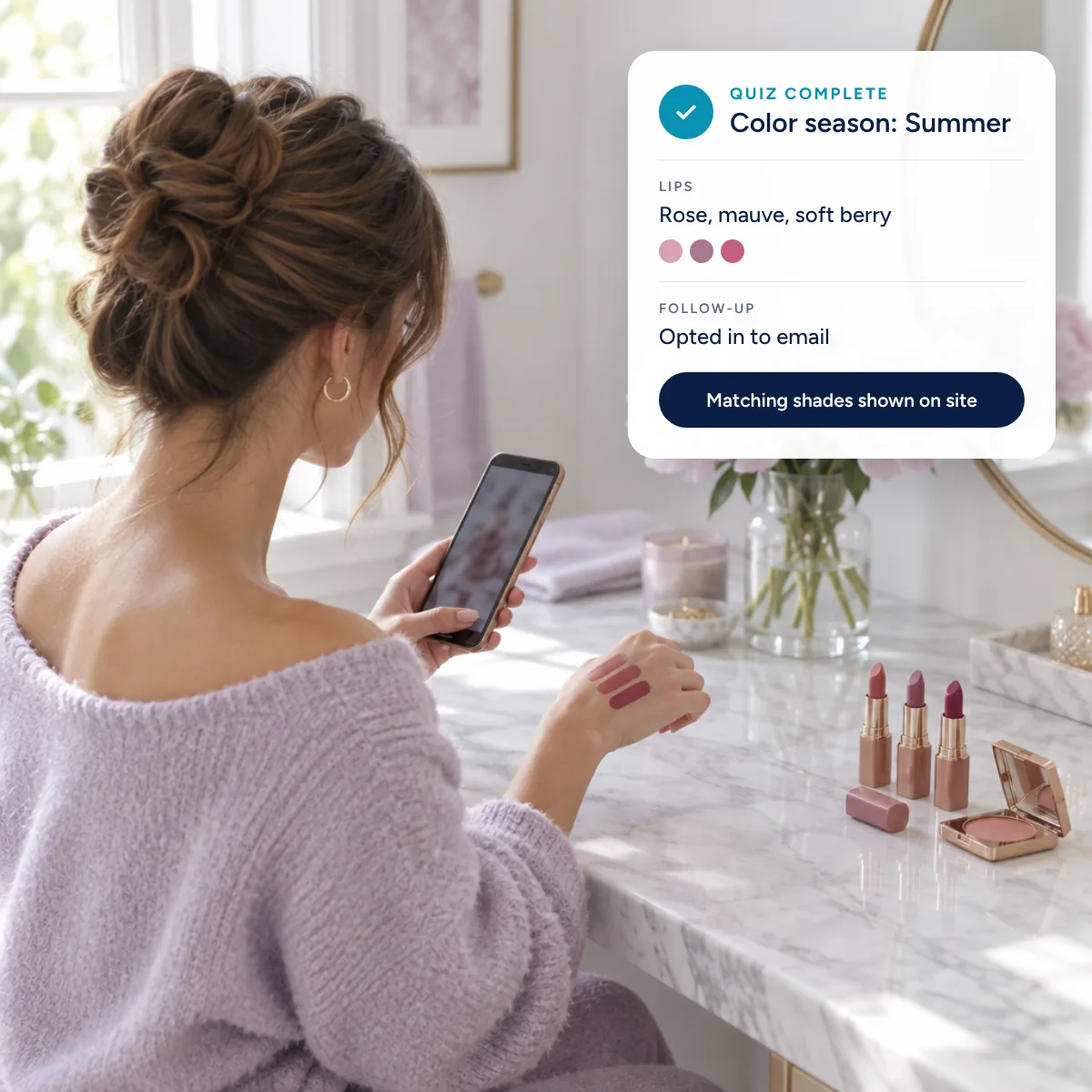

More customers. More repeat purchases. More value from the data they already have.
Beauty marketers aren't short on growth ambitions. But at Beauty Connect, we heard just how differently brands are approaching them.
One team was trying to reach a new generation of shoppers. Another was focused on getting first-time buyers to come back. Others were looking at all the customer information they'd collected and asking why more of it wasn't translating into revenue.
Different priorities. Three recurring challenges. And some very practical opportunities to tackle them.
Here’s what we heard, and where we think beauty marketers can put it to work.
Finding your next customer takes more than a bigger audience
Reaching new customers was a recurring priority, usually paired with a visibility problem: understanding visitors before they buy, capturing useful information, and knowing which efforts bring in new buyers.
For one brand, the challenge was reaching a new generation of shoppers while existing customers kept coming back. For others, the gap was anonymous visitors they couldn’t identify, or attribution and testing that needed work.
Those are distinct problems. They also complicate the familiar instruction to go find more customers.
More traffic can give a brand more chances to sell. It can also give more people the opportunity to browse, get overwhelmed, and leave with 14 tabs open.
Our takeaway: Acquisition work needs to include what happens after someone arrives.
Can shoppers find a useful starting point? Can they tell you what they’re looking for? Can you learn enough from that interaction to make the next step more relevant?
For a beauty brand, that might mean helping a first-time visitor narrow an assortment by their preferences or routine. Then testing whether that guidance helps more new shoppers buy. The audience gets them to the door. The experience still has work to do.
The second purchase deserves its own routine
For other brands, the bigger opportunity came after the first order: repeat purchase, replenishment, CRM, and loyalty. The priorities ranged from encouraging a second order to improving retention and growing order value.
This wasn't everyone's problem. One brand already had healthy repeat business and needed new customers more. That distinction matters: A brand's growth plan should reflect where its opportunity actually sits.
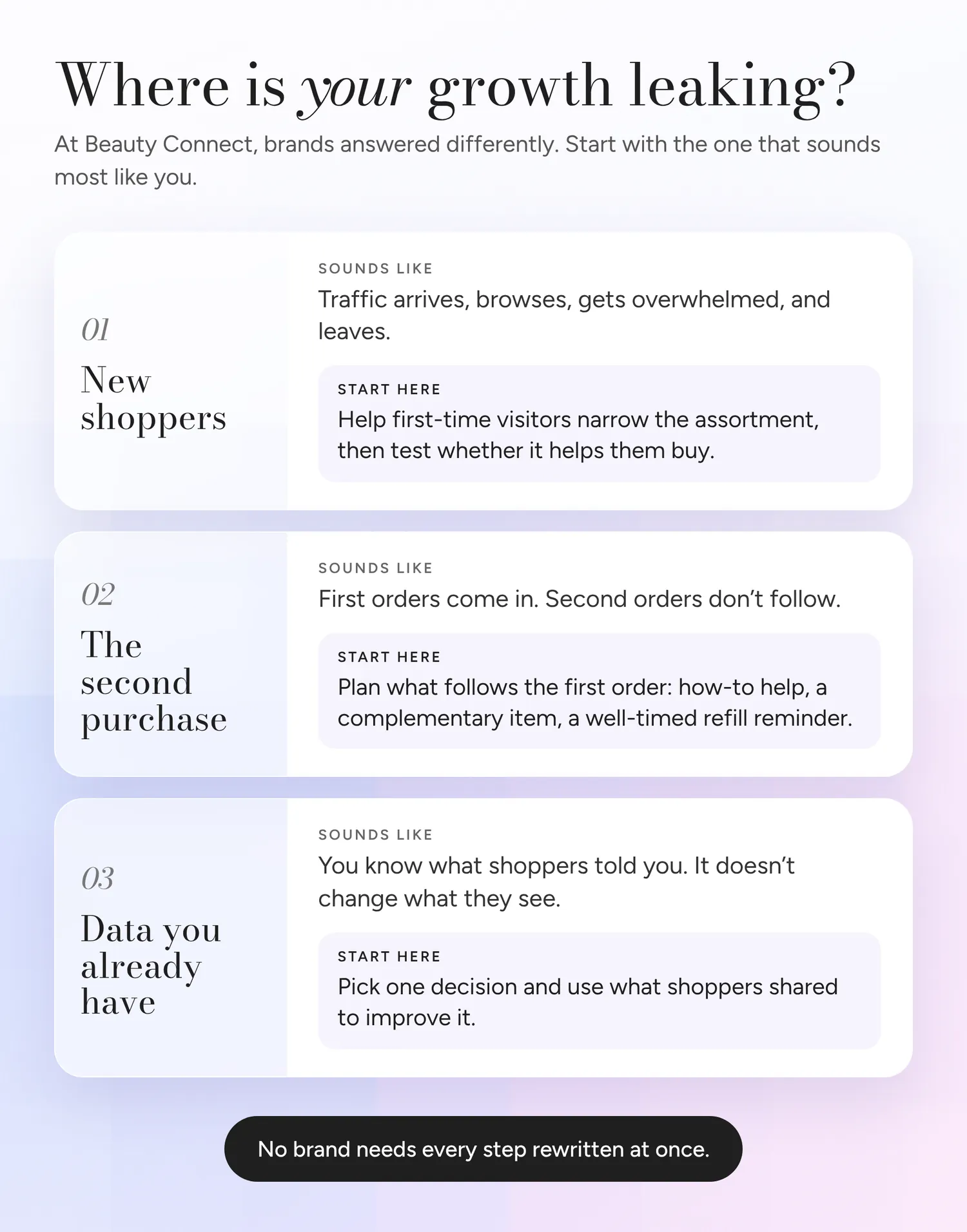
For brands focused on repeat purchase, the first order gives marketers a useful place to begin. It also creates a fresh set of decisions.
Does the customer need help using the product? Is there a complementary item that makes sense? When might a replenishment message be useful?
These are ways to translate a retention goal into a customer experience. They're also questions worth answering before another discount code enters the chat.
A replenishment reminder, for example, should account for the product, purchase timing, and whether someone has already reordered. A complementary recommendation should help complete a routine rather than simply introduce whatever needs promoting this week.
The commercial question is concrete: Does the follow-up help customers return, and does that return create value for the business?
Make what you know change what happens next
The third theme was the gap between having tools and customer data and actually putting them to work. The specifics varied: understanding anonymous visitors, using what was already available, or improving email and SMS follow-up.
Our read: The next opportunity often sits between learning something about a shopper and acting on it.
The color-analysis quiz at our booth offers a small illustration of the learning part. Attendees answered a few questions and got a result about themselves.
For a beauty brand, the next step could be to use declared preferences to shape product recommendations or, with permission, follow-up messages. The useful test is whether those answers change what the shopper sees. Another field in a database won't help them choose a lipstick.
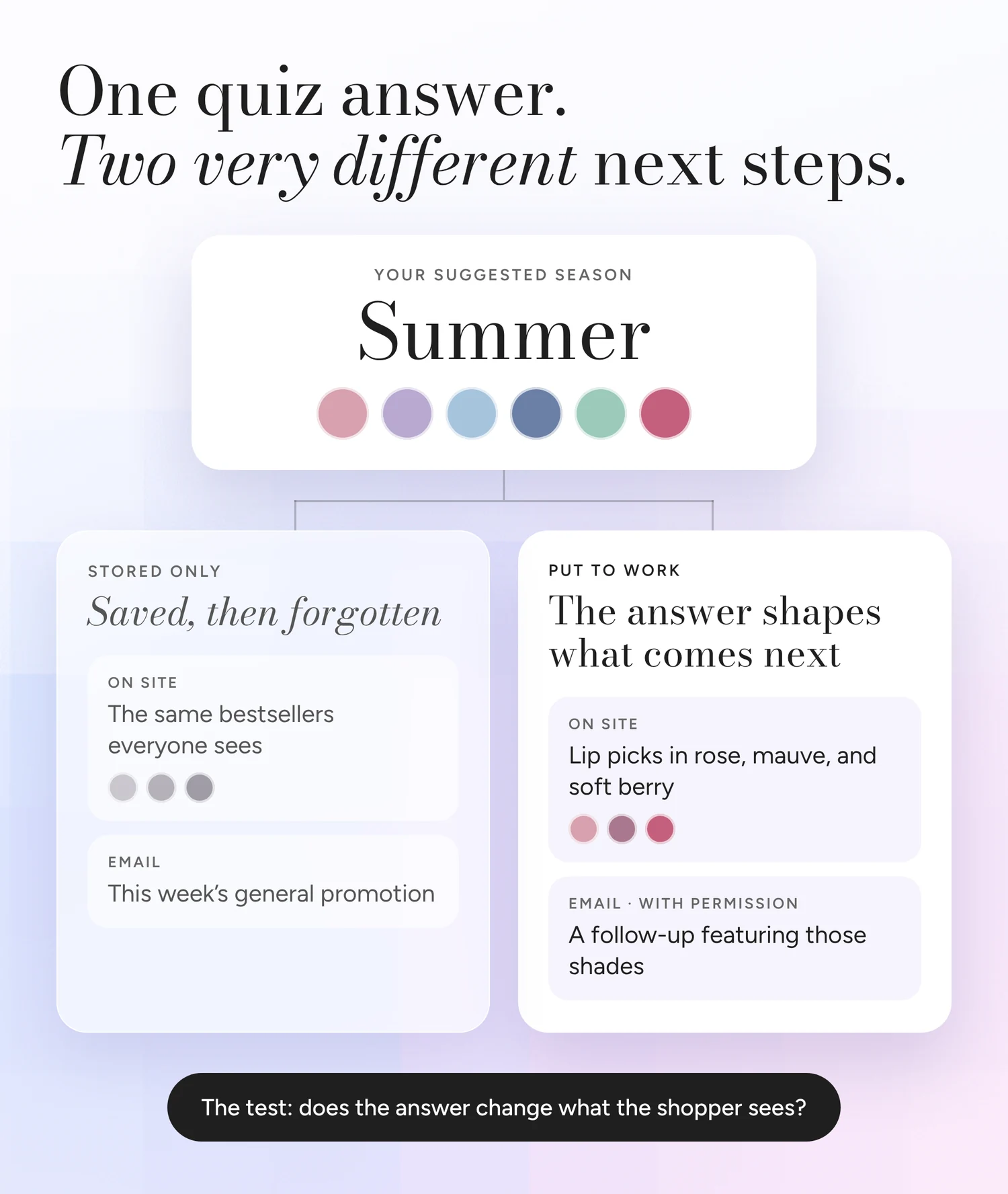
BlueConic is built for that step. It captures what shoppers tell you and what they do in one profile, so marketers can act on it on-site and in email and SMS without waiting on a data team. The business still has to define the job, whether that's helping someone choose, encouraging a return, or stopping an irrelevant promotion.
Start with one of those decisions. Decide what information would improve it. Then measure whether the changed experience helps.
No brand needs every step in its growth routine rewritten at once. But each step should earn its place.
Even the best beauty routine can use an occasional edit.
Explore how BlueConic helps beauty brands turn customer data into the next purchase.

Jess is the Demand Generation Manager at BlueConic, where she spends her days figuring out what makes marketers stop scrolling, pay attention, and actually do something. She works across digital campaigns, events, and marketing technology, navigating the messy space between getting someone's attention and actually earning their business. Jess knows that even the smartest technology needs a good story, and that the right message is only as good as its timing. A former field hockey player and current barre instructor, Jess has apparently never been interested in hobbies that involve sitting still. She brings that same energy to marketing, along with a healthy appreciation for strategy, a little friendly competition, and her perfect dog, Theo.