
What Is a Data Management Platform (DMP) and How Does It Work?
Learn how data management platforms work, how they differ from CDPs and CRMs, and how they support audience targeting and digital advertising.


Customer data collection drives targeting, personalization, and campaign performance. Every click, impression, and purchase adds another signal to improve data-driven decision-making. However, organizing, segmenting, and activating data becomes far more difficult without the right analytics tools in place. A data management platform (DMP) enables organizations to gather audience data from multiple sources, structure it into actionable audience segments, and execute data activation across various marketing channels.
Key takeaways
- A data management platform helps marketers collect, organize, and activate audience data for targeted advertising.
- DMPs primarily work with anonymous identifiers such as cookies and device IDs and are built for campaign-driven media execution.
- DMP data often includes first-party, second-party, and third-party sources, with a strong focus on advertising use cases.
- Customer data platforms (CDPs) differ from DMPs by creating persistent, unified customer profiles tied to known individuals.
- Identity resolution and first-party data strategies have become more important as third-party cookies decline.
- CDPs support real-time personalization, cross-channel activation, and long-term customer engagement.
What is a data management platform (DMP)?
A data management platform is a software system that collects, organizes, and activates audience data for advertising purposes. It aggregates data from multiple sources, matches that data to anonymous identifiers such as cookies or device IDs, and builds audience segments marketers can use for targeting.
Most DMPs focus on anonymous, behavioral, and third-party data rather than known customer profiles. They are designed to help advertisers reach the right audiences, expand campaign reach, and improve media efficiency. Instead of storing long-term customer records, a DMP concentrates on audience grouping, campaign activation, and advertising optimization.
What is a DMP used for?
A DMP is built to make advertising more precise and more efficient. It brings together signals from multiple sources, turns them into usable audience insights, and helps teams execute smarter marketing campaigns. Marketers can base decisions on structured data and defined audience groups instead of relying on broad assumptions.
These capabilities show up in several common use cases.
Audience targeting
DMPs help marketers define and refine a specific target audience. They analyze behavioral patterns and engagement signals to build segments that align with campaign goals. Better targeting reduces wasted spend and improves overall campaign performance.
Programmatic advertising
Programmatic advertising relies on automation and scale. DMPs send segments into demand-side platforms where ads are purchased in real time. As new data flows in, segments can update to reflect changing behavior and engagement.
Media buying optimization
Audience data informs smarter media buying decisions. Marketers can adjust bids, reallocate budgets, and refine placements based on performance trends. Over time, this improves efficiency and supports more disciplined campaign management.
Expanding reach with third-party audiences
DMPs allow brands to expand beyond their existing customer base. Through partnerships and third-party providers, marketers can discover new prospects and extend campaign reach while maintaining alignment with audience criteria.
How does a data management platform work?
DMPs turn data into actionable insights that lead to more focused marketing efforts. They collect customer data from multiple data sources, organize that information, and activate it to reach a defined target audience.
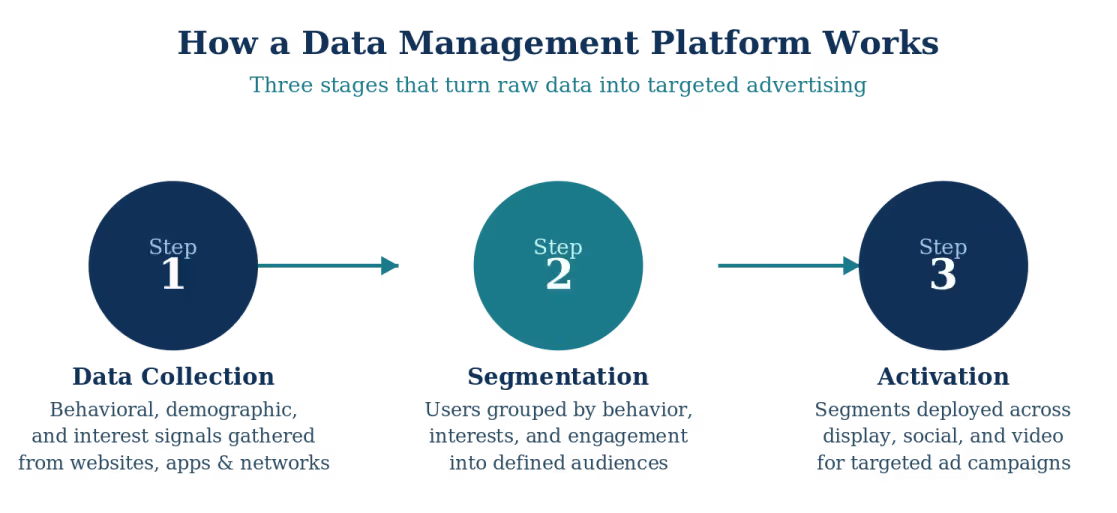
1. Data collection
DMPs gather customer data from websites, mobile apps, ad networks, and third-party providers. The data collected often includes behavioral signals, demographic data, and interest-based attributes. Most DMPs tie this information to anonymous identifiers such as cookies or device IDs. The result is a consolidated audience dataset that can be used for managing customer data at scale.
2. Data organization and segmentation
Once the data is collected, the platform moves into data organization. A DMP groups users based on available data such as behaviors, interests, or engagement patterns. Segmentation allows marketers to define a specific target audience, whether that means recent visitors, high-intent prospects, or repeat buyers. Structured segments make customer data more usable, measurable, and relevant.
3. Activation for Targeted Advertising
After segments are built, the DMP activates them across advertising platforms. These audience groups power targeted ad campaigns across display, social, video, and other digital channels. Instead of broad outreach, marketing efforts focus on improving ad targeting, increasing efficiency, and enhancing performance.
Key features of a data management platform
Strong data management depends on clean data storage and reliable data integration. Marketing teams often manage first-party data and second-party data across multiple systems, which makes organizing data stored in different places a challenge. DMPs provide tools that bring that information together and support advanced analytics that improve marketing efforts.
Key features of a DMP include:
- Data collection and integration: Collects customer data from multiple data sources, including first-party data and second-party data environments.
- Data organization: Structures raw data and maintains consistent data storage so information remains usable and accessible.
- Segmentation: Groups users based on behaviors and interests to support audience creation and define a precise target audience.
- Anonymous identity matching: Connects data collected to cookies and device IDs to recognize users across sessions within advertising environments.
- Lookalike modeling: Applies advanced analytics to identify new prospects who resemble high-performing segments.
- Activation for targeted advertising: Pushes segments into advertising platforms to support focused, efficient marketing efforts.
- Campaign reporting and analytics: Measures performance and turns results into actionable insights that inform future strategy.
What types of customer data do DMPs use?
A strong data strategy depends on understanding not just how data is activated, but what data feeds the system in the first place. Data management platforms draw from multiple inputs to build advertising audiences at scale. The value of DMP data depends heavily on data quality, source reliability, and how well different streams of information work together.
Common data types include:
- First-party customer data: Data collected directly from a company’s own properties, such as website activity, app usage, email engagement, and purchase behavior. This data typically offers stronger data quality and more relevant signals for audience segmentation.
- Second-party customer data: Data shared through direct partnerships with trusted organizations. These agreements allow companies to expand audience reach while maintaining greater control over data quality.
- Third-party customer data: Data acquired through a data marketplace or external providers. It often includes demographic attributes, interest categories, or intent signals that help advertisers scale campaigns and reach new audiences.
- Anonymous behavioral data: Activity tied to cookies or device IDs rather than known individuals. This type of DMP data captures browsing patterns and engagement signals that inform audience creation and targeted advertising strategies.
DMP vs. CDP vs. CRM: What’s the difference?
Data management platforms, customer data platforms (CDPs), and customer relationship management systems (CRMs) often show up in the same technology stack. While they all handle customer data, they answer very different business questions. The distinction shapes how you collect data, how long you retain it, and how you activate it.
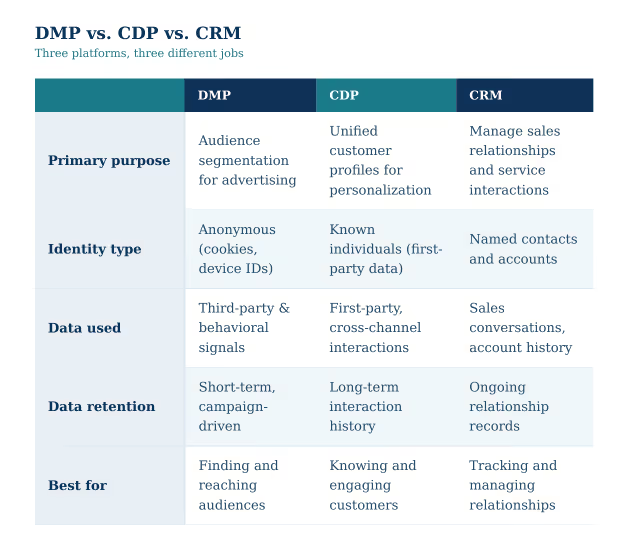
DMP vs. CDP: Anonymous advertising data vs. persistent customer profiles
The DMP vs. CDP distinction centers on identity and purpose. A data management platform operates in the advertising layer. It works primarily with anonymous identifiers such as cookies and device IDs. Its purpose is audience segmentation for targeted advertising, often using short-term, campaign-driven data.
A CDP operates at the customer level. It builds comprehensive customer profiles tied to known individuals, unifies first-party customer data across channels, and maintains interaction history over time. While a DMP optimizes reach, a CDP supports personalization, lifecycle marketing, and long-term customer engagement.
In simple terms, a DMP helps you find people. A CDP helps you know them.
DMP vs. CRM: Campaign activation vs. relationship tracking
CRM systems focus on direct sales and service interactions. They store contact information, track conversations, manage data pipelines, and support account management.
A data management platform does not track sales conversations or manage accounts. It builds audience segments and distributes them into advertising platforms to improve campaign performance. One system organizes relationships. The other optimizes media execution.
Where CDPs have an advantage over DMPs
Advertising technology has changed. Privacy expectations have changed. Customer expectations have changed. These shifts have forced organizations to rethink how they collect, manage, and activate customer data across multiple users. In response, CDPs have become more effective because they align with how modern marketing processes must operate across existing systems and other platforms.
Shift away from third-party cookies
Third-party cookies once powered online campaigns. Today, browser restrictions and regulatory pressure have reduced their reliability. As anonymous tracking becomes less dependable, platforms built primarily around third-party identifiers lose effectiveness. CDPs rely more heavily on first-party data and identity resolution, which makes them more resilient in a privacy-focused era.
Growing need for first-party data strategies
Organizations now prioritize zero-party and first-party data as a competitive advantage. Zero- and first-party customer data reflect direct interactions, purchases, preferences, and engagement signals from multiple users. A CDP unifies this information across existing systems and other platforms, creating a stronger base for consistent marketing processes and long-term customer understanding.
Persistent, unified customer profiles
A CDP builds profiles that persist over time. Instead of treating interactions as isolated events, it connects behaviors across sessions, devices, and touchpoints through identity resolution. These unified profiles support deeper customer insights, more accurate segmentation, and more informed decision-making across marketing processes.
Real-time personalization and omnichannel activation
Customers expect experiences that feel timely, relevant, and personal across email, web, mobile, and advertising channels. A customer data platform enables real-time segmentation and activation, allowing teams to tailor messaging, offers, and content based on individual behavior and preferences. Instead of running generic online campaigns, marketers can deliver coordinated, personalized interactions across touchpoints.
Data ownership and privacy compliance
Regulatory frameworks and consumer expectations require greater transparency and control. A customer data platform helps organizations manage consent, control data access, and maintain visibility into how customer data flows across existing systems. Strong data ownership practices reduce risk and support sustainable growth.
How BlueConic helps businesses activate first-party data
As organizations shift toward first-party data, technology must do more than collect and store information. It must connect data across systems, resolve identities accurately, and make insights usable across marketing processes. BlueConic is built to meet those demands and more.
Instead of treating data as a static asset, BlueConic enables teams to turn zero- and first-party customer data into ongoing engagement, personalization, and measurable growth.
Here’s how BlueConic delivers on that promise:
- Unified customer profiles: Combines first-party customer data from web, mobile, email, CRM systems, and other sources into persistent, individual-level profiles.
- Advanced identity resolution: Connects customer interactions across devices and channels to maintain accurate, up-to-date profiles.
- Real-time segmentation and activation: Enables marketers to personalize online campaigns and coordinate engagement across channels as behavior changes.
- Integration with existing systems: Connects with marketing automation platforms, analytics tools, advertising systems, and data warehouses to support streamlined marketing processes.
- Zero-party data capture: Collects preference and intent data directly from customers to enhance personalization and improve data quality.
With BlueConic, organizations move beyond managing data for advertising alone. They gain a platform designed to turn customer data into meaningful, measurable customer engagement.
Move beyond anonymous reach
Data management platforms improved audience targeting and brought discipline to digital advertising. They helped marketers organize raw data, build segments, and execute targeted campaigns more efficiently.
Today, growth depends on more than reach. It depends on understanding customers, connecting interactions over time, and delivering personalized experiences across the lifecycle. Customer data platforms make that possible through unified profiles, strong identity resolution, and activation built around first-party customer data.
If you’re ready to move from fragmented data to meaningful customer engagement, book a demo to see how BlueConic can help you put your first-party data to work.
Frequently asked questions
What is a data management platform?
A data management platform is a system that collects, organizes, and activates audience data for advertising. It works primarily with anonymous identifiers such as cookies and device IDs to build audience segments for targeted campaigns. DMPs are commonly used to improve media buying, audience targeting, and advertising performance.
How is a DMP different from a CRM?
A data management platform supports advertising activation, while a customer relationship management system focuses on managing direct customer and sales interactions. A DMP builds audience segments for marketing campaigns. A CRM stores contact information, tracks conversations, and manages pipelines for sales teams.
What's the best platform for data management?
The best platform depends on your goals. If the priority is advertising audience targeting, a data management platform may be appropriate. If the goal is unifying first-party customer data, enabling identity resolution, and supporting personalization across the lifecycle, a customer data platform such as BlueConic may be a better fit.
