
9 Types of Customer Segmentation Models [2026]
Learn the most common types of customer segmentation models and how each approach helps you analyze, group, and better understand your audience.


Key takeaways
- Customer segmentation is the practice of dividing an audience into groups, while segmentation models define the structured approaches used to create those groups.
- Common customer segmentation models include demographic, psychographic, behavioral, geographic, firmographic, needs-based, transactional, technographic, and micro-segmentation models.
- Each segmentation model examines customer data from a different perspective, revealing unique insights about who customers are, how they behave, and what they need.
- The most effective segmentation strategies often combine multiple models to build a more complete and accurate understanding of the audience.
- Selecting the right segmentation model depends on marketing objectives, data availability, and how segments will be applied to campaigns and customer experiences.
What’s the best way to reach your target customers? The specific details are different for every business, but all effective marketing strategies have a few things in common.
Customer personas are part of it, and to create those, you’ll need to leverage customer segmentation models to collect the data to develop those personas. Customer segmentation analysis will help you break data down into useful information that your marketing team can use to better understand the various groups that make up your customer base.
Let’s dig deeper to explore customer segmentation as a whole—plus nine different customer segmentation models that will help you examine your customer base from every angle.
What is customer segmentation?
Every industry and every business has a target audience. And every target audience is made up of groups of people who have a variety of different personality traits and other characteristics in common.
Examples of these kinds of characteristics are:
- Age groups
- Geographical location
- Spending habits
- Value systems
- Pain points
As a marketer, identifying these groups among your target market is crucial, and that’s what customer and audience segmentation is all about. Once you’ve identified the customer segments that make up your audience, you can use that information to create high-value content and advertising campaigns to target each segment, and to position your product or service according to the needs and wants of each segment.
The end result? When you successfully segment and target your audience with a personalized marketing strategy for each of your different customer segments, you’ll see higher engagement, more conversions, reduced churn, increased customer loyalty, and a bigger return on your marketing investment.
What are customer segmentation models?
Customer segmentation is the practice of dividing an audience into groups, but segmentation models define how that division happens. Each model provides a structured way to evaluate customer data based on a specific set of criteria, such as attributes, behaviors, needs, or usage patterns.
Rather than describing the outcome, segmentation models shape the approach. They determine which data points are analyzed, how customers are grouped, and what insights those groupings reveal. By choosing the right model, marketing teams can examine their audience from different perspectives and create segments that are more consistent, comparable, and actionable.
Why are customer segmentation models important?
Without a clear model in place, segmentation efforts often become inconsistent, difficult to scale, or disconnected from real marketing decisions.
Using defined segmentation models helps teams:
- Create consistency across analysis: Models establish a clear framework for grouping customers, making segments easier to compare, refine, and reuse over time.
- Turn data into actionable insights: By organizing customer data around specific criteria, models reveal patterns that directly inform messaging, offers, and channel strategy.
- Align segmentation with business goals: Different models support different objectives, whether the focus is acquisition, retention, personalization, or product development.
- Reduce guesswork in targeting: Structured models replace assumptions with data-driven groupings that reflect how customers actually behave and what they need.
- Scale segmentation efforts: As data volumes grow, models make it easier to maintain clarity and accuracy without rebuilding segments from scratch.
Together, these benefits help marketing teams move from broad audience definitions to more precise, effective strategies that drive engagement and results.
9 types of customer segmentation models
What makes people interesting is that each has their own unique set of characteristics. Because of that variation, there are nearly infinite ways to organize people into different subsets or segments.
However, some models are more helpful than others for marketing—and those will be the customer segmentation models we’ll talk about below.
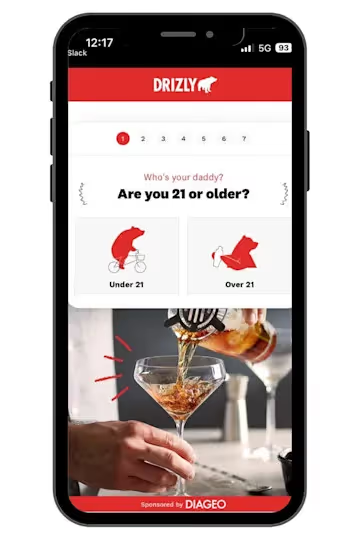
1. Demographic segmentation
Demographic segmentation categorizes people into specific groups based on demographic factors like age, gender, education level, marital status, or income. It’s one of the most popular customer segmentation models because it can help you identify the people who are most likely to want or need your products.
For example, if you’re based in agriculture, then your potential customers are likely in their 30s or older and probably based in a geographical area where agriculture is prominent.
But if you’re selling the latest fashions to college-aged people? In that case, one of the prominent segments in your customer base will be people aged 18 to 24 in urban areas.
2. Psychographic segmentation
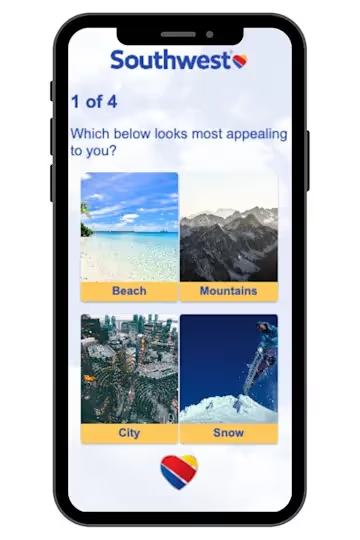
This type of segmentation focuses on the psychological aspects that different subgroups of people may share. Attitudes, belief systems, core values, and lifestyles are all facets that you’ll examine when you use this type of segmentation.
Psychographic segmentation helps you better understand the different needs among various personalities—family-oriented people vs. individualistic types, people who love adventurous vacations vs. those who enjoy staycations, and so on.
3. Behavioral segmentation
Behavioral segmentation involves analyzing what people are buying, how often they are buying it, and why they’re making the purchase. For example, you could group customers by their usage level: Heavy users, moderate users, and light users. Purchase frequency is another metric you can analyze. Are people buying your product all the time, or is there something like a holiday that triggers them to make the purchase?
Other behavior triggers include things like brand loyalty or a person’s stage within your customer journey. When you analyze customer behavior, you can better understand the specific behaviors of different groups so that you can create tailored marketing messages designed to reach those customers when they’re most likely to convert.
4. Geographic segmentation
Geographic segmentation sounds simple on the surface—it’s all about where your target audience lives, right? Well, there are a couple of key things to know about geographic segmentation that will help you learn a lot about your customer base.
First, geographic segmentation can be as broad or as narrow as you like. Think in terms of major regions like the American Midwest or smaller areas, like a metro area or a single ZIP code.
Sometimes you may only need the broad-strokes data that larger regions can provide, but if you zoom in on smaller geographical regions, you can often collect data about things like where people live vs. where they work, which can be helpful when part of your audience is a rural or suburban crowd who travels into urban areas for work.
The other aspect to consider is that geographic data offers a lot more information beyond a spot on a map. Location data sheds light on customer needs, their lifestyles, and their general preferences. You’ll be able to identify specific segments who may live an urban, suburban, or rural lifestyle, pick up on local culture and colloquialisms, understand how the area climate might drive purchasing decisions, and so on.
5. Firmographic segmentation
A one-size-fits-all marketing strategy isn’t the best choice when marketing to consumers—and it’s not ideal for business-to-business commerce either. That’s why you need firmographic segmentation.
Unlike other types of segmentation, this model looks at organizations rather than individuals. Often, this means basing datasets around organizational types, like nonprofit organizations, enterprises, small businesses, government agencies, or independent contractors.
From there, you can delve deeper into each segment to learn more about common characteristics like their size, scale, funding levels, or industry.

6. Needs-Based segmentation
While it has other uses, needs-based segmentation is particularly helpful when you’re developing new products. This model groups customers based on what they need from your product or service, and because of that, it’s best to center needs-based segmentation data around the must-haves.
For example, if you’re creating an image-editing app, consider the fact that graphic designers need certain editing tools, whereas wedding photographers need the ability to edit images in large batches, and influencers need flattering filters and features that make sharing easier.
Use a needs-based customer segmentation strategy to determine how you can solve problems or fulfill the functional needs for each of your groups of customers.

7. Transactional segmentation
This customer segmentation model breaks existing customers down based on their transactions with your brand. That includes how they discovered your brand, how recently they’ve made a purchase, how often they purchase, and how much they spend on average.
Using this information, you can target segments based on their purchasing behavior by, for example, sending out special offers to entice those who make more sporadic purchases.
You can also focus this type of segmentation on how much value each customer segment offers to your business. This is referred to as “value-based segmentation,” and it’s helpful when you offer products at various price points because it helps you match budget-appropriate products to each segment’s average spending level.
8. Technographic Segmentation
Technographic segmentation is popular among SaaS companies because it groups customers based on the way they use technology. Examples of these market segments include mobile users vs. desktop users or the types of apps and software that customers are using.
With this data, you can improve customer experiences and retention by offering apps, software, or web-browsing experiences tailored to each segment’s preferences.
9. Micro-segmentation
Technically, micro-segmentation can refer to any of the types of segmentation listed above. The key factor that sets this customer segmentation model apart from the others is that the goal is to drill down on highly specific customer data to create ultra-targeted segments.
For example, if you’re selling branded apparel for a particular sports team, rather than focusing on a broad geographical region, you may want to focus your marketing efforts on the segment that lives within that team’s metro area.
To drill down further, you’d create separate segments based on gender, age, and other demographic information. From there, you could further subdivide segments based on income level, so that you can target budget-appropriate offerings to each of your micro-segments. In this way, you can use customer segmentation to build customer engagement and conversions through highly personalized marketing campaigns.
How to choose the right customer segmentation model
Not every segmentation model fits every business or goal. The right approach depends on what you want to learn about your audience and how you plan to use those insights. Choosing intentionally helps ensure your segments remain practical, relevant, and easy to apply across marketing efforts.
Gather Data While Improving Customer Relationships With BlueConic Experiences.
Step 1. Start with your marketing objective
Define what you are trying to achieve before selecting a segmentation model. Goals such as improving acquisition, increasing retention, launching a new product, or refining personalization all require different types of customer insights. Your objective should guide which data matters most.
Step 2. Evaluate existing data
Segmentation models are only as effective as the data behind them. Review the quality and consistency of your available customer data, including behavioral signals, demographic details, transactional history, or direct customer input. Choose a model that aligns with what you can reliably analyze.
Step 3. Consider how the segments will be used
Think beyond analysis and focus on activation. Select a model that allows segments to be easily applied to campaigns, messaging, or experiences. If segments cannot be acted on, they are unlikely to deliver value.
Step 4. Match the model to your business type
Different models work better for different business contexts. Consumer-focused brands often rely on behavioral or psychographic models, while B2B organizations may benefit more from firmographic or needs-based approaches.
Step 5. Plan for ongoing refinement
Customer behavior changes over time. Choose a segmentation model that can be updated and adjusted as new data becomes available. Flexible models make it easier to evolve your strategy without starting from scratch.
Best practices for customer segmentation models
Segmentation is only as valuable as what it enables. Strong models create clarity that marketing, product, and CX teams can actually use. The difference between helpful segmentation and shelfware often comes down to how thoughtfully it’s built and maintained. Here are some best practices to use as a guide:
1. Prioritize clarity over complexity
It can be tempting to build highly detailed segments from the start, but overly complex groupings often become difficult to activate. Begin with clear, distinct segments that map directly to marketing actions, then layer in nuance over time.
2. Validate segments against real outcomes
Segments should correlate to measurable differences in behavior, engagement, or value. If two segments respond the same way to campaigns, they may not need to be separate groups. Regularly test performance to confirm that segmentation is creating meaningful differentiation.
3. Keep segments dynamic
Customer behavior evolves. Static segments quickly become outdated, especially when based on behavioral or transactional data. Revisit and refresh segments routinely so they reflect current customer realities.
4. Align teams around shared definitions
Segmentation loses impact when different teams interpret segments differently. Document criteria clearly and ensure marketing, sales, and product teams understand how segments are defined and when they’re updated.
4. Balance precision with scale
Highly granular segmentation can improve personalization, but not if it creates audiences too small to act on effectively. Look for the right balance between specificity and reach to maintain both relevance and impact.
Common mistakes to avoid in customer segmentation models
Even well-intentioned customer segmentation strategies can fall short if they aren’t grounded in clear objectives and practical application. Missteps often happen when teams focus on analysis without thinking through activation.
1. Segmenting without a defined purpose
Creating segments without tying them to a business goal leads to data that looks interesting but doesn’t inform decisions. Always start with the question you’re trying to answer or the outcome you want to influence.
2. Relying on a single data source
No one model tells the full story. Limiting segmentation to only demographic or transactional data can create blind spots. Combining multiple perspectives produces a more accurate understanding of your audience.
3. Over-segmenting too early
Breaking audiences into too many micro-groups before you have sufficient data or activation plans can create unnecessary complexity. Build depth gradually as your data maturity grows.
Gather data while improving customer relationships
Effective segmentation depends on having reliable, actionable data. The challenge is continuously collecting insights that reflect changing customer behaviors and preferences.
Interactive experiences such as quizzes, surveys, lookbooks, and assessments can create value for customers while generating first-party data you can actually use. When designed thoughtfully, these deepen trust, engagement, and surface the signals you need to refine segments over time.
If you’re exploring ways to strengthen your customer segmentation strategy, BlueConic’s Experiences can help you turn engagement into insight, so your customer data grows alongside your relationships. Learn more about how Experiences supports smarter segmentation.
Frequently asked questions
What is a customer segmentation model?
A customer segmentation model is a structured method for grouping customers based on specific criteria, such as demographics, behavior, needs, or technology usage. The model defines how customer data is analyzed and organized.
What are the most common customer segmentation models?
Common models include demographic, psychographic, behavioral, geographic, firmographic, needs-based, transactional, technographic, and micro-segmentation models. Each examines customer data from a different angle.
What is the most effective customer segmentation model?
There is no single best model. The most effective approach depends on your marketing goals, the data you have available, and how you plan to use the segments.
Can multiple customer segmentation models be used together?
Yes. Many businesses combine multiple models to build a more complete understanding of their audience and create more actionable segments.

Brittany Gulla is a growth and product marketing leader with extensive experience working across B2B and B2C businesses at various stages. Passionate about crafting brand and product stories that align with data-driven growth tactics in order to fuel business expansion. Brittany specializes in focusing on messaging, website positioning, and AI-driven strategies. Previously, she helped launch a global B2B agriculture tech brand at Resonant Technology and grew revenue to $6M annually at Bow Wow Labs, Inc. She also drove major account growth and branded campaigns at Mashable. Brittany excels in data-driven strategies, customer acquisition, and omni-channel marketing to fuel business success.