
Building Multi-Channel Win-Back Campaigns at Scale
Learn how to build multi-channel win-back campaigns that re-engage lapsed customers, recover revenue, and protect customer lifetime value.
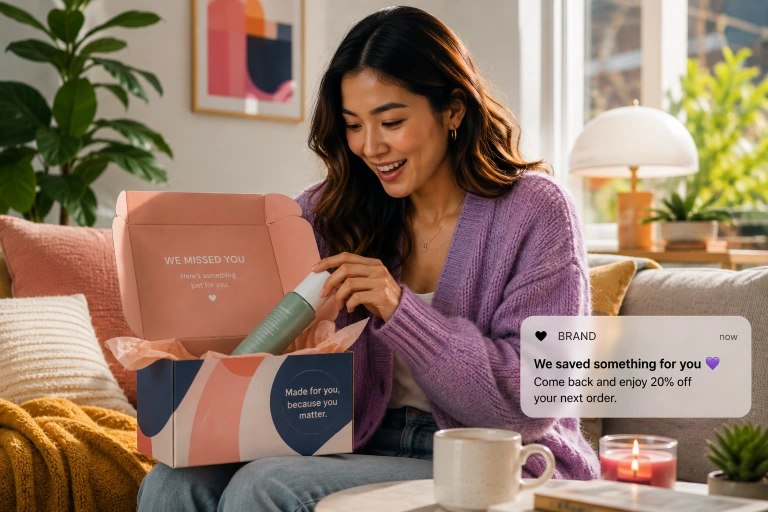

Lapsed customers are not always lost customers. Many of your past customers already understand your brand's value, have a detailed purchase history, and may only need a well-timed, gentle reminder or a personalized offer to re-engage. Unfortunately, many marketers still rely on isolated, batch-and-blast win-back efforts. By transforming your marketing strategy into a scaled, multi-channel win-back campaign, you can coordinate dynamic reactivation journeys across email, social media, short message service (SMS), and your website to recover lost revenue and protect customer lifetime value.
This guide explores how to identify lapsed customers, integrate your customer data, dynamically segment audiences, coordinate personalized multi-channel journeys, and measure impact to successfully scale your reactivation efforts.
Key takeaways
- Begin your win-back campaign early by tracking disengagement signals, such as declining email opens or increasing purchase gaps, rather than waiting for churned customers to fully abandon your brand.
- Scale your customer win-back strategy using unified customer profiles that update with real-time data, replacing stagnant static lists pulled from disconnected systems.
- Coordinate multi-channel win-back campaigns so you can deliver tailored messages on preferred channels rather than sending identical notifications everywhere.
- Personalize your high-value offers carefully to avoid over-discounting, which can degrade profit margins and train consumers to wait for promotions.
- Protect your sender reputation and avoid message fatigue by establishing strict suppression rules, frequency caps, and holdout test groups.
What is a win-back campaign?
A win-back campaign is a structured customer reactivation strategy designed to re-engage customers who have stopped purchasing, slowed their engagement, or shown clear signs of quiet churning. In retention marketing, it is important to distinguish between fully lapsed customers, who may not have interacted with you in months, and at-risk customers, who are just beginning to show early signs of disengagement. Identifying these differences early allows you to act before the customer relationship is completely broken.
Re-engaging lost customers is often far more cost-effective than chasing expensive new acquisitions. While a traditional win-back campaign often relies solely on a single, isolated win-back email, a scalable multi-channel approach coordinates highly personalized messages across several digital touchpoints. This strategy might include email marketing, SMS, mobile push, in-app messaging, paid media, and personalized web experiences. By meeting your customers where they are active, you can dramatically increase customer retention, recover lost revenue, win customers back, and maximize the monetary value of your existing customers.
For example, when a high-value customer has not made a purchase in 90 days, your system can automatically trigger a personalized win-back email containing a dynamic replenishment reminder. Simultaneously, the platform can suppress them from expensive acquisition retargeting ads and present a customized welcome banner when they next visit your website.
Why win-back campaigns are hard to scale
Many growth marketing teams struggle to scale their customer win-back campaigns due to structural and technical barriers that isolate customer data. Here are the most common challenges teams experience:
- Disconnected customer data: Crucial indicators such as past purchase history, website behavior, email click-throughs, and loyalty point balances typically reside in isolated marketing tools. This prevents a unified view of your former customers.
- Stagnant audience lists: Manually exporting inactive subscribers into static spreadsheets takes too much time. By the time you upload the list, many customers may already have repurchased, leading you to send an irrelevant win-back email.
- Unclear inactivity thresholds: What qualifies as a lapsed customer varies. A 30-day buying gap is highly concerning for a fast-moving consumer brand, but it is typically normal for a business-to-business vendor or seasonal retailer.
- Generic messaging: Sending the same customer win-back email to a highly loyal member who recently went quiet and to a one-time purchaser who left a year ago results in poor engagement.
- Siloed marketing channels: When your email marketing and paid media teams operate independently, they risk delivering conflicting messages. This lack of coordination often leads to over-discounting or severe message fatigue. By failing to orchestrate these touchpoints, brands are leaving money on the table through wasted ad spend and missed reactivation opportunities.
Connect the customer data needed to identify and act on churn signals
To build a scalable and highly personalized win-back campaign, you must establish a continuous, unified data foundation. Relying on disconnected spreadsheets and manual queries prevents you from responding to real-time disengagement signals. When you unify your zero- and first-party customer data, you gain insights into customer behavior, including why a customer left and what might encourage them to return.
A high-performing reactivation engine requires unifying several key data signals:
- Purchase history and order frequency: Knowing what they have previously purchased helps you predict when they might need to buy again.
- Product and category affinity: Tracking which items they browse helps you craft personalized messages that align with their interests.
- Email, SMS, and app engagement: Monitoring clicks, opens, and mobile app interactions shows you where they prefer to engage.
- Loyalty status and points balance: Displaying an unused reward or an impending tier demotion can serve as a compelling motivator to return.
- Zero-party data and consent choices: Understanding declared preferences and explicit channel permissions ensures your campaigns remain compliant and highly relevant.
Unifying these indicators into persistent profiles allows your marketing team to identify patterns of disengagement in real time. Instead of executing manual list pulls, you can establish automated, always-on activation streams that guide inactive customers back to your brand exactly when they are most receptive.
Start by defining what “lapsed” means for your brand
Before you can deploy any win-back strategies, you must first define what a lapsed customer looks like for your specific business. There is no single timeframe that applies to every brand.
Set inactivity thresholds based on your buying cycle
Your inactivity thresholds should reflect your natural sales cycle and typical purchase frequency. For instance, a subscription-based brand might flag churned subscribers after just 14 days of platform inactivity, whereas a luggage brand might consider a customer active even if they have not purchased in a year. Tracking when customers cancel a subscription or turn off auto-renewal provides a precise baseline for your buying cycle.
Track the signals that show disengagement
Customers rarely disappear without warning. By tracking key disengagement signals, you can launch win-back campaigns before a customer fully churns.
- Days since last purchase: A growing gap between purchases relative to their average buying cadence.
- Decline in email engagement: Moving from an active reader to one of your inactive subscribers who no longer opens emails. This metric helps you engage subscribers with more relevant content before they become fully dormant.
- Decreased web behavior: Visiting your site less frequently or completely stopping category browse activity.
- Cart abandonment: Adding items to a shopping cart without completing the checkout process.
Look for the reason behind inactivity
Understanding the reason behind disengagement allows you to tailor your win-back strategy. A customer might stop buying because of a bad shipping experience, a seasonal shift, or simply because they completed a one-time project. When you identify these patterns, you can address the root cause, whether that requires a service-recovery discount or a helpful product recommendation.
Segment win-back audiences by churn signals, value, and likelihood to return
Treating all inactive customers identically is an expensive and inefficient approach. To maximize your customer win-back success, you must segment your audience based on their value, history, and likelihood to return. This ensures you spend your marketing budget where it will drive the greatest incremental return.
Using dynamic tools, you can easily group your customers by historical order frequency and lifetime value. Consider focusing on these high-value segments for your next campaign:
- High-value lapsed customers: Prioritize previous customers with high customer lifetime value, high historical order counts, or active loyalty membership, as they represent the most valuable lost revenue.
- Likely-to-reactivate buyers: Target inactive customers who still visit your site occasionally or read your emails, as they often require only a gentle reminder to buy again.
- One-time buyers who never returned: Design a tailored sequence for a new customer who purchased once but did not make a secondary purchase within the typical onboarding window. This targeted focus helps you re-engage churned customers who only need a small nudge to build a buying habit.
- Slipping loyalty members: Flag loyalty members who are close to losing their tier status, using their accrued points as a compelling reason to shop.
- Category-specific inactive users: Group customers who have stopped purchasing from a specific product line but might be interested in a different category.
Dynamic segmentation ensures that these groups stay up to date in real time. As soon as a dormant customer makes a purchase or changes their email preferences, they should instantly exit the win-back segment and enter a post-purchase nurture track.
Build the win-back journey around timing, message, and motivation
A successful, scalable win-back journey is built on a logical progression of messages that adapt to the customer's responses. Rather than leading with a deep discount immediately, design a multi-stage flow that preserves your profit margins.
Start with low-pressure reminders before stronger incentives
Begin your sequence with a personal touch that emphasizes value over a transaction. Instead of a direct sales pitch, use your initial touchpoints to encourage users to explore new platform features, update their preferences, or view a personalized product curation. A timely win-back email allows you to win customers back through brand affinity before you resort to offering percentage discounts.
Change the message based on behavior
Your win-back sequence should branch dynamically based on how users interact with your messages. If a dormant user opens your initial email but does not convert, you might show them personalized offers on your website during their next visit. If they ignore your email marketing entirely, your system should automatically pivot to another channel, such as a social retargeting ad.
Exit or sunset customers at the right time
The moment a customer completes a purchase, they must immediately exit the reactivation journey. For those who remain completely unresponsive after your defined sequence, establish clear sunset rules. Doing so protects customer trust and prevents you from repeatedly messaging churned subscribers who have permanently disengaged.
Coordinate channels based on customer behavior
Scaling your reactivation efforts requires breaking down channel silos so that your messages work together seamlessly. Coordinating your touchpoints ensures you reach customers where they are most active without overwhelming them, allowing you to re-engage subscribers across multiple platforms without overlap.
A unified multi-channel strategy coordinates the following touchpoints:
- Email: This remains the foundation for longer-form win-back emails, replenishment prompts, and highly detailed loyalty program updates.
- SMS: Deliver short, time-sensitive alerts directly to the mobile devices of opted-in customers who have historically responded well to text messaging.
- Mobile push and in-app messaging: Re-engage churned users who still have your app installed by highlighting new features or app-exclusive discounts.
- Paid media and retargeting ads: Serve highly coordinated ads on social and search platforms to high-value customers who are no longer opening your emails.
- Website personalization: Welcome returning dormant users back to your site with customized homepage banners and product recommendations based on their past purchase history.
- Direct mail: For high-value accounts or businesses with longer sales cycles, sending a physical card or catalog can cut through digital noise.
The goal of multi-channel orchestration is to choose the most efficient path for each customer. By matching your channel selection to individual customer behavior and consent records, you can build highly cost-effective campaigns that feel personal and intentional.
Use offers strategically so discounts do not become the strategy
While offering exclusive discounts is a proven strategy for winning back past customers, relying on them too heavily can lead to over-discounting. When discounts become your default strategy, you risk training your customers to cancel or wait for a sale before making future purchases.
Consider these alternative, non-discount incentives:
- Personalized product recommendations: Showcase items that complement their previous purchases.
- Back-in-stock notifications: Alert them when a highly popular item they previously browsed is available again.
- Early access opportunities: Invite them to shop a new collection or seasonal line before the general public.
- Loyalty program milestones: Remind them of their accrued points or upcoming rewards.
To protect your margins, match your offer value directly to the customer's predicted lifetime value. High-value customers who have gone completely quiet may justify a percentage discount, while lightly engaged shoppers may only need a simple, content-driven, gentle reminder. Always test these different incentives against each other to identify the most profitable path to customer reactivation.
Build in suppression rules, list hygiene, and fatigue controls
A scaled win-back program requires strict guardrails to protect your customer relationships and brand reputation. Sending too many promotional messages to unengaged users can quickly lead to high opt-out rates and declining email deliverability.
Protect your campaigns by implementing these critical suppression rules:
- Immediate purchase suppression: Ensure that as soon as a customer converts, they are removed from all active win-back efforts.
- Active customer service exclusion: Suppress churned customers who have open support tickets or recent product return requests from receiving promotional offers.
- Frequency capping: Limit the total number of win-back messages a customer can receive across email, SMS, and push channels within a single week.
- Strict sunset parameters: Automatically stop messaging inactive users who have not opened or clicked a win-back campaign in 180 days.
- Clean paid media audiences: Update your custom audiences on ad platforms daily to avoid wasting ad spend on customers who have already returned.
By maintaining high standards of list hygiene, you protect your sender reputation and focus your marketing resources on the inactive customers who are most likely to return.
Example of a scalable multi-channel win-back journey
To visualize how this works at scale, let us look at a typical, automated reactivation journey for a premium consumer brand:
- The Trigger: A customer crosses their 90-day inactivity threshold without making a purchase, and their email engagement score drops.
- Day 1 (Email): The customer receives a highly personalized email featuring new arrivals in the specific product category they previously purchased from.
- Day 3 (On-Site): If the customer clicks the email link and visits your website, they are greeted with a personalized homepage banner that highlights their current loyalty points balance.
- Day 7 (SMS): If they did not click the email but have opted in to receive SMS, they receive a text message highlighting a limited-time free shipping offer.
- Day 10 (Paid Social): If they remain unengaged, they are added to a highly targeted social media audience that displays a video highlighting your brand's commitment to quality.
- Day 14 (The Exit): The moment they complete a purchase at any point in this journey, they instantly exit the win-back stream and enter a post-purchase onboarding flow.
This journey adapts dynamically to every customer action, ensuring that your messaging remains highly relevant and that you never waste marketing spend on customers who have already returned.
Measure win-back performance beyond opens and clicks
Evaluating the success of your win-back campaigns requires looking beyond simple engagement metrics like email opens and click-through rates. While these metrics can help you optimize an email subject line, they do not prove that your campaigns are driving profitable retention.
Win-back campaign KPIs to track
To measure the true business impact of your campaigns, focus on these key performance indicators (KPIs):
- Reactivation rate: The percentage of your targeted lapsed audience that completes a key reactivation action.
- Revenue recovered: The total dollar amount generated directly by customers who entered the win-back journey.
- Customer lifetime value (CLV) protected: The long-term purchasing behavior of reactivated customers over the following 6 to 12 months.
- Margin after incentives: The profitability of your recovered sales after subtracting the cost of discounts, free shipping, and ad spend.
- Unsubscribe and opt-out rates: The percentage of users who unsubscribe during the campaign, indicating message fatigue.
Use testing and holdout groups to prove incremental impact
Some lapsed customers will eventually return to your brand naturally without any marketing intervention. To understand the true lift of your win-back campaign, always measure performance against a holdout group—a small, randomized sample of inactive customers who do not receive any reactivation messages. Comparing the reactivation rate of your campaign group with that of the control group allows you to calculate the true incremental revenue generated by your win-back strategies.
How BlueConic helps brands scale multi-channel win-back campaigns
To build and run sophisticated, multi-channel win-back campaigns at scale, brands need more than a static list of inactive customers. They need a way to understand which dormant customers are worth targeting, which type of message or offer is most likely to motivate them, and when to stop spending on customers unlikely to return.
BlueConic’s Dormant Customer Reactivation Growth Play helps marketing teams bring high-value customers back into the buying cycle by using unified customer data and AI-powered insights to prioritize the customers most likely to re-engage. Instead of sending the same “we miss you” message or blanket discount to every dormant customer, teams can focus their resources where they are most likely to drive profitable return purchases.
With BlueConic, brands can:
- Identify the right dormant customers to target: Use unified profiles, purchase history, engagement behavior, and AI models to determine which customers are most likely to return.
- Prioritize high-value reactivation opportunities: Focus win-back efforts on customers with meaningful revenue potential, loyalty value, or purchase history, rather than treating every inactive customer the same.
- Tailor offers and incentives more strategically: Avoid over-discounting the entire dormant base by concentrating incentives where they are most likely to drive incremental purchases.
- Coordinate outreach across channels: Activate consistent win-back messaging across email, SMS, push, web, and paid media using unified profile intelligence.
- Control suppression and reduce wasted spend: Remove recent purchasers, ineligible customers, or unlikely-to-return audiences from active win-back campaigns and paid media audiences.
- Optimize based on real outcomes: Continuously refine who you target, what you offer, and when you reach out based on purchase behavior and campaign performance.
By combining unified customer profiles, AI-driven return likelihood, cross-channel activation, and outcome-based optimization, BlueConic helps brands move beyond generic batch-and-blast win-back campaigns. The result is a smarter reactivation strategy that focuses budget, messaging, and incentives on the customers most likely to come back.
Win-back campaigns scale when your data can keep up
Successful win-back campaigns are not built on generic email blasts or aggressive, margin-draining discounts. Instead, they require a deep, data-driven understanding of why your customers became quiet, combined with the ability to reach them with the right message, on the right channel, at the perfect moment.
By investing in a robust data foundation and designing automated, multi-channel journeys, you can protect your customer relationships, recover lost revenue, and consistently improve your long-term customer retention rates.
Ready to transform your retention strategy? Book a demo with BlueConic today to see how our platform can help you unify customer data, identify churn signals in real time, and deliver personalized reactivation experiences at scale.
Frequently asked questions
What is a win-back campaign?
A win-back campaign is a targeted customer reactivation strategy designed to re-engage past customers who have stopped purchasing or shown signs of quiet disengagement. These campaigns use coordinated messages across channels like email, SMS, and paid media to encourage customers to return.
When should you start a win-back campaign?
You should begin your win-back efforts as soon as you detect early signs of disengagement, such as a drop in email open rates or longer gaps between purchases. Waiting until a customer has fully lapsed makes reactivation much more difficult and costly.
What channels should a win-back campaign include?
The best campaigns coordinate multiple channels, including email marketing, SMS, social media retargeting ads, and on-site personalization. You should select channels based on your customers' past engagement patterns and explicit channel permissions.
How many win-back messages should you send?
While there is no single rule, most successful campaigns use a sequence of three to five messages spaced out over several weeks. You should always establish a maximum threshold and a sunset rule to prevent message fatigue.
How do you measure win-back campaign success?
Measure your success using business-focused KPIs like reactivation rate, incremental revenue recovered, customer lifetime value protected, and margin after incentives. Always compare your results against a holdout control group to prove the true impact of your campaigns.
