
How a B2C CDP Helps Brands Drive Customer Growth
Learn how a B2C CDP turns browsing, purchase, and loyalty data into growth, with 6 use cases spanning acquisition, cart recovery, and retention.


Every browse, purchase, email click, app session, and product review is a customer telling you something. Most B2C brands are listening, but the messages arrive in different systems, in different formats, at different times. By the time anyone pieces them together, the moment to respond has usually passed.
A business-to-consumer customer data platform (B2C CDP) solves that by turning scattered signals into customer profiles your teams can actually use. From there, acquisition, shopping, retention, and loyalty efforts all get sharper because they're built on what each customer is doing and asking for right now.
Key takeaways
- A B2C CDP connects customer information from every touchpoint into unified profiles.
- First-party behavior and zero-party preferences reveal what customers want and how their needs evolve.
- Profiles deliver the most value when teams point them at specific growth outcomes.
- Popular CDP use cases include finding better audiences, guiding product discovery, recovering carts, driving repeat purchases, and strengthening loyalty.
- BlueConic's CDP is the customer data foundation for its broader Customer Growth Engine, which turns customer signals into action.
What is a B2C CDP?
A B2C CDP is software that gathers information about individual consumers from multiple systems and interactions. It connects browsing activity, purchases, email engagement, app behavior, loyalty details, and preferences customers choose to share, then matches identifiers to organize those signals into profiles your teams can use across every customer-facing channel.
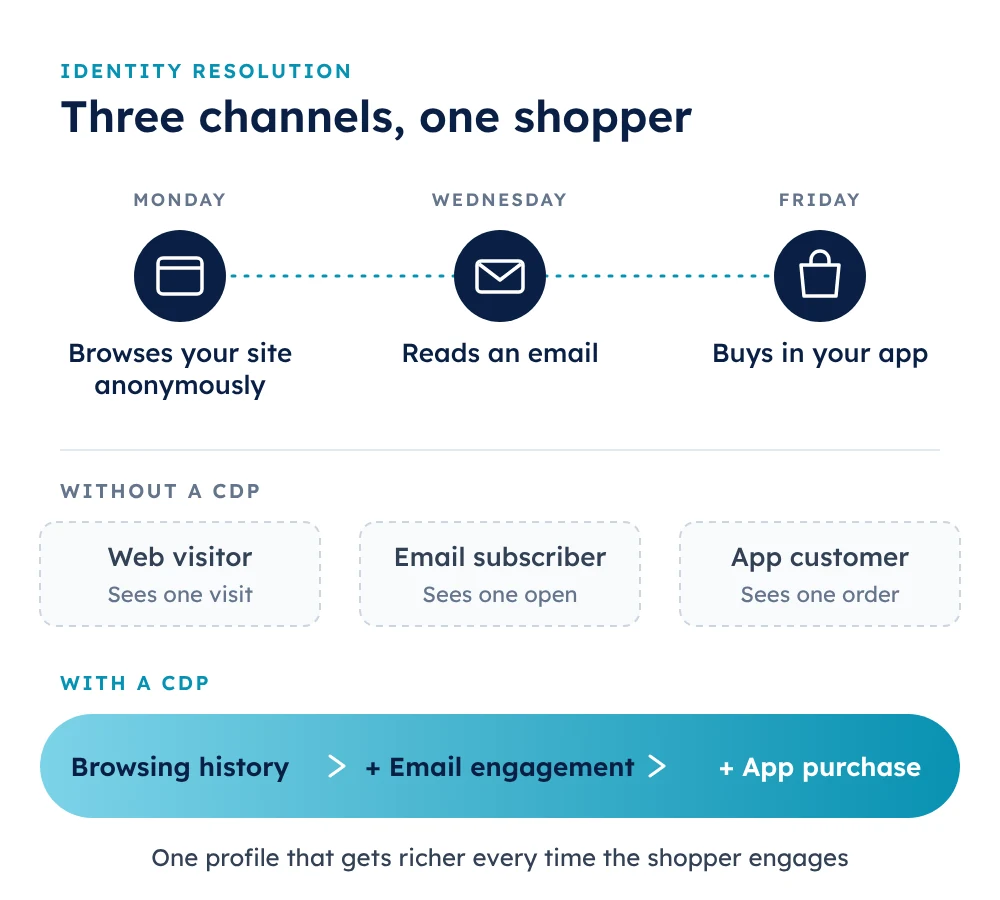
That identity work is especially important in B2C, where customer journeys rarely follow a straight line. Someone might browse your site anonymously on Monday, read an email on Wednesday, and make a purchase in your app on Friday. A CDP stitches those moments together into a single, fuller picture of that customer, and the picture keeps getting richer as they engage.
How does a B2C CDP support customer growth?
Connected profiles created by a B2C CDP give your teams a foundation for building audiences, making decisions, and coordinating actions across channels. Instead of each tool reacting to its own narrow slice of data, every touchpoint works from the same understanding of the customer, from discovery through purchase and beyond.
Growth comes from putting that foundation to work on clear goals. Pair a focused use case with the right data and connected channels, measure what happens, and the results compound over time.
B2C CDP use cases across the customer lifecycle
A profile earns its value when it changes what a brand does next. Each of these retail and e-commerce examples shows how customer signals can shape a smarter action, along with a practical way to measure the impact.
1. Improve acquisition with more relevant audiences
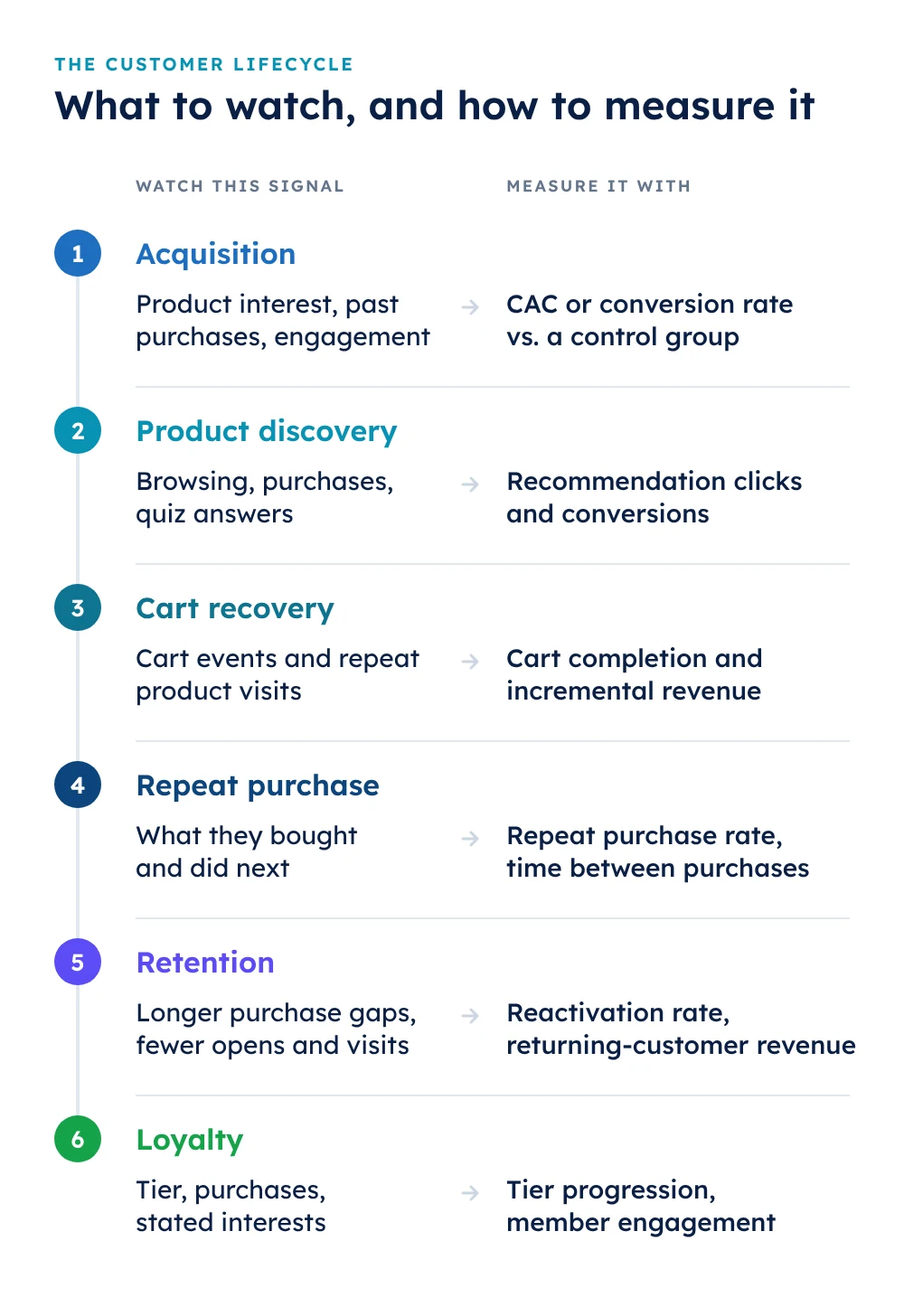
Paid media gets expensive fast when it reaches the wrong people. First-party signals such as product interest, past purchases, and engagement help you spot the audiences most likely to respond to a campaign and push them straight to your ad platforms. Just as important, you can suppress customers who've already converted, so acquisition dollars stop chasing people you've already won.
The payoff is less wasted spend and more budget aimed at prospects who fit the campaign's goal. To see the impact, compare customer acquisition cost or conversion rates for your CDP-built audiences against a baseline or control group.
2. Help shoppers find the right products
Faced with hundreds of options in a category, many shoppers simply give up. Recent browsing, past purchases, and preferences shared via a quiz or product finder help guide each shopper toward the right fit with tailored recommendations and supporting content. A quiz is especially valuable because it captures zero-party data, the details customers volunteer directly, such as intended use, style, budget, or specific needs.
Combining those signals makes product discovery feel personal rather than showing every visitor the same bestsellers. Engagement with product pages, recommendation clicks, and conversions from recommended products are all good ways to track how well it's working.
3. Respond to abandoned carts and buying intent
A shopper adds an item to their cart, then disappears. That cart event, especially when paired with repeat visits to the same product, is one of the clearest buying signals a brand can get. A well-timed follow-up through email, messaging, or a personalized experience on their next visit can bring them back to finish the job.
Freshness is everything here. The instant a shopper completes their purchase, cart reminders should stop so they are never nudged about something they already bought. The CDP supplies the up-to-date customer context, while your connected email, messaging, advertising, and e-commerce tools deliver the experience. Measure success through cart completion rates or incremental revenue, ideally against a comparison group.
4. Encourage relevant repeat purchases
The first purchase is the start of the relationship, not the end. What a customer bought and what they do afterward can shape a follow-up that feels helpful rather than pushy. Depending on the product, that might be a replenishment reminder timed to their actual usage, a complementary item, or tips for getting more out of what they bought.
A customer who just picked up a new serum, for example, might first receive a quick guide on how to use it, followed later by a recommendation for a moisturizer that pairs well with it. Because timing reflects each customer's behavior rather than a one-size-fits-all schedule, the outreach lands when it's most useful. The repeat purchase rate and the time between purchases indicate how well it's performing.
5. Identify customers at risk of disengaging
Customers don’t announce that they're drifting away. Instead, the gaps between purchases grow, email opens drop off, and visits become less frequent. A CDP surfaces those shifts early so you can step in before a customer goes dormant and test which message or offer brings them back.
The best response isn't always a discount. Some customers need product news; others need a friendly reminder or a helpful service message. Tracking reactivation rates and revenue from returning customers, compared against a baseline or control group, shows which approach works best for each segment.
6. Make loyalty engagement more personal
Points balances and tier status only tell part of a member's story. A CDP connects loyalty data with purchase behavior, browsing, and stated interests, giving your teams the full context they need to make every member interaction count.
That might mean reminding a member about a reward that matches their interests, or celebrating a milestone based on their recent activity. Your loyalty platform continues to manage points, tiers, and program rules, while the CDP makes the engagement around them more relevant. Tier progression, repeat purchase rate, and member engagement are all strong measures of success.
What does a B2C CDP need to deliver these results?
The capabilities that matter most depend on the use case you're tackling. Cart recovery calls for fresh cart and purchase data, plus connections to your e-commerce and messaging tools, while a loyalty program also draws on member status and transaction history. Across the board, look for:
- Connected data sources: Access to the customer signals your use case depends on, such as web activity, purchases, app events, campaign engagement, or loyalty data.
- Identity resolution: The ability to link interactions across devices and channels to the right profile, turning anonymous activity into known customers as they engage.
- Fresh, usable profiles: Customer information that updates fast enough to power the experience you have in mind, whether that's a real-time recommendation or a weekly campaign.
- Activation and integrations: Connections to the channels and tools where you engage customers, including e-commerce, email, mobile, advertising, and personalization systems.
- Governance, ownership, and measurement: Responsible use of consented data, clear accountability for data quality and access, agreement on who builds audiences and runs each channel, and a way to measure outcomes.
Getting marketing, data, IT, and channel teams aligned on the signals, permissions, actions, and metrics for your first use case sets the whole program up for success. And there's no need to wait until every possible data point is connected. Most brands start with what they have and build from there.
How to choose your first B2C CDP use case
A single, focused use case is the fastest route to results. It also shows your team exactly what data and coordination it needs before expanding to the next opportunity.
1. Pick one growth goal
Settle on one outcome to improve, such as cart recovery, repeat purchases, or customer retention among those starting to drift. A clear goal keeps priorities straight and makes progress easy to track.
2. Identify the signals that matter
Decide which customer actions or attributes will help you respond more effectively. For cart recovery, that means cart activity and purchase status. For loyalty, it could mean program tier, purchase history, and engagement.
3. Define the experience, owners, and action
Spell out what will change, where customers will see it, and which systems will make it happen. Assign owners for data quality, audience setup, channel execution, and governance, and agree on consent requirements, offer limits, and other rules before going live.
4. Measure and refine
Establish a baseline and choose a metric tied directly to your goal, such as cart completion or repeat purchase rate. A control group or other comparison shows what the use case actually contributed. Then use those lessons to sharpen the experience or line up your next use case.
How BlueConic turns customer data into growth
Plenty of platforms can tell you who your customers are. BlueConic is built to act on it. Its CDP connects identity, behavior, purchases, preferences, and intent into live customer profiles, and its broader Customer Growth Engine uses that context to decide what to do next, carry out actions across your channels, and learn from every response.
- Complete customer profiles. Behavioral, transactional, and preference data come together in one place, giving every team the same rich view of each customer.
- Built-in zero-party data capture. Quizzes, product finders, and preference centers let customers tell you what they want, and those answers flow straight into their profiles.
- Segments that stay current. Audiences built on interests, behavior, and lifecycle stage update as customers act, then flow to your ad platforms, email tools, and personalization systems.
- Growth Plays for specific outcomes. Pre-built, agent-powered plays tackle goals like cart recovery, order value expansion, and customer reactivation, while your team sets the objectives and guardrails.
- Measurement that informs the next move. BlueConic ties customer responses to business outcomes, so every campaign makes the next one smarter.
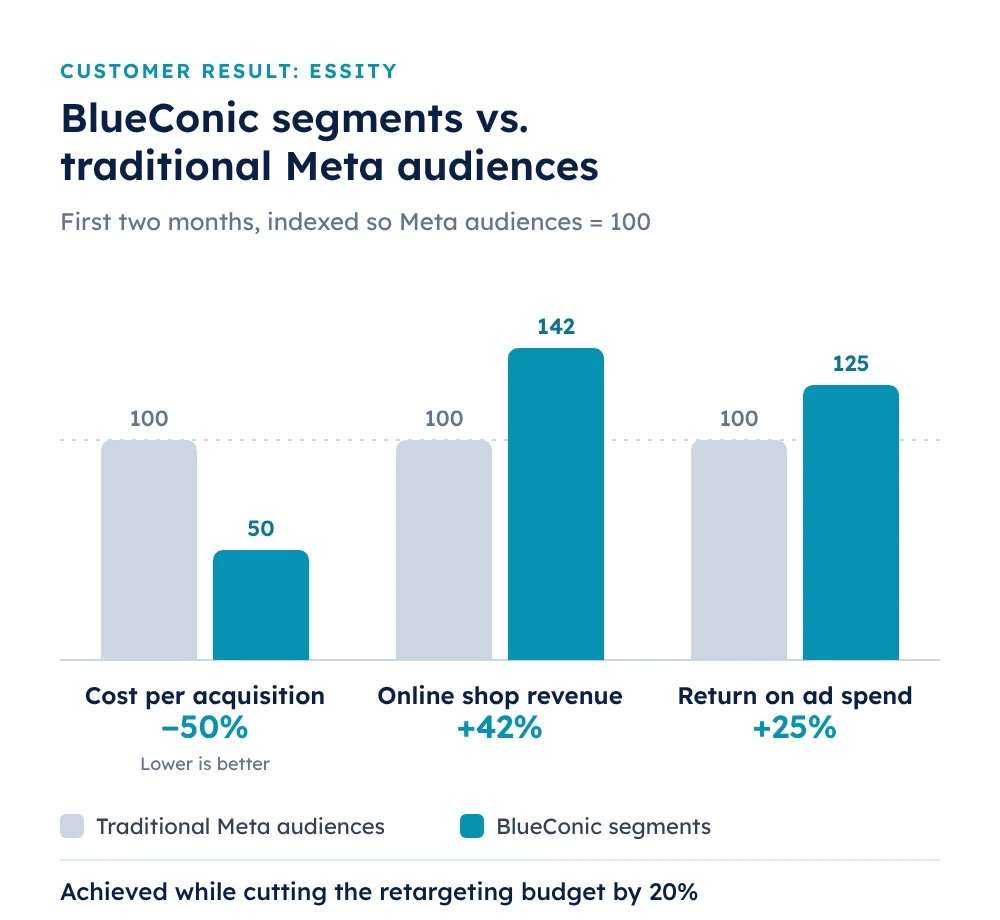
Essity's Consumer Goods Americas Unit shows how quickly this adds up. Facing the loss of third-party cookies, the team used BlueConic to merge siloed data into unified profiles covering purchase history, category interest, product sampling, website behavior, engagement, and consent preferences. It then built targeted segments from those profiles and activated them in its advertising campaigns. Compared with traditional Meta audiences, the BlueConic segments cut cost per acquisition in half and lifted online shop revenue by 42%.
Build growth strategies around your customers
The brands that grow fastest are the ones that respond to customers as individuals. A B2C CDP makes that possible at scale, connecting the signals behind acquisition, shopping, repeat purchases, retention, and loyalty so every interaction builds on the last. Start with one customer need and one measurable goal, prove the impact, and let each win point you toward the next.
Curious where your brand stands today? Take the Data Maturity Assessment to see how ready your customer data is to drive growth and identify the biggest opportunities.
Frequently asked questions
What is the difference between a B2C CDP and a CRM?
A CDP brings customer information from many sources into profiles that power segmentation and activation across channels. A CRM typically supports relationship-management workflows, such as sales, service, or account interactions. The two work well together, with the CDP feeding broader customer context into the CRM while the CRM handles its specific workflows.
What types of data does a B2C CDP use?
A B2C CDP draws on behavioral data like browsing and app activity, transactional data like purchases, engagement data like email interactions, and zero-party data such as preferences and interests customers share directly. The more sources a brand connects, with the right permissions in place, the richer each profile becomes.
How can a B2C CDP improve customer retention?
A CDP detects early warning signs, such as longer purchase intervals or declining engagement, so teams can act before a customer lapses. Those signals help define the right audience and shape personalized follow-up, and measurement shows which efforts bring customers back.
Which B2C brands benefit most from a CDP?
Brands that engage customers across multiple channels and systems tend to see the biggest gains, especially those looking to lower acquisition costs, lift conversion, or improve retention. Retail, e-commerce, CPG, and travel brands are particularly strong fits, since their customers generate a steady stream of actionable signals.

Kayte Grady is the Content Director at BlueConic, specializing in customer data, personalization, and AI. Her work focuses on breaking down how modern technology works and how real people can actually use it. A former social worker turned marketer, Kayte earned her BA from Purdue University, where she learned to write clearly and edit ruthlessly. That background shapes how she approaches content, starting with people first and supported by technology. An outspoken champion of ADHD professionals, Kayte has found growth, camaraderie, and kindred spirits in tech—despite her never-ending devotion to the paper calendar.