
Hotel CDP Use Cases: From Direct Bookings to Guest Loyalty
See 7 ways hotels use a CDP to turn guest data into direct bookings, smarter upsells, and stronger loyalty, from the first search to the next stay.
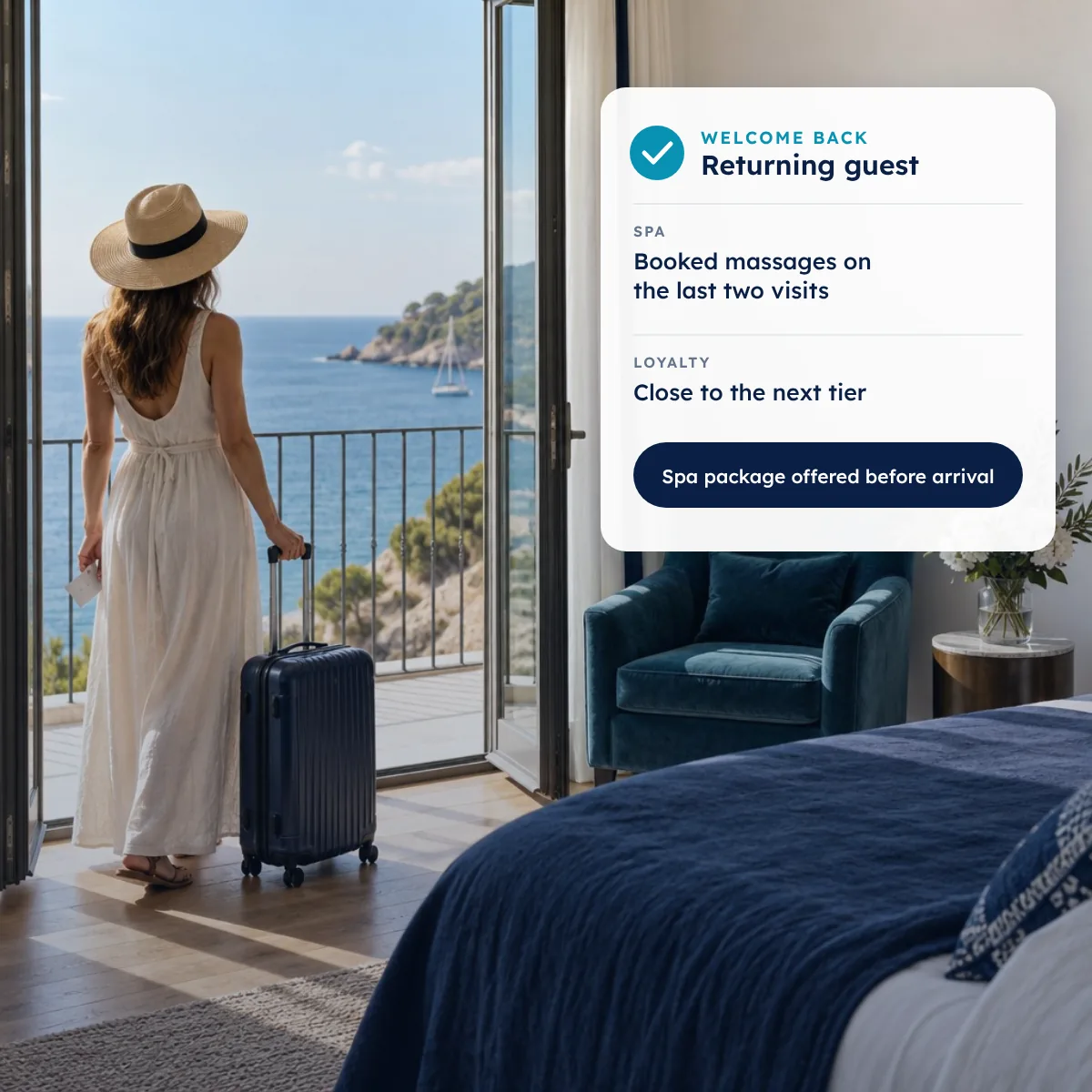

Few industries learn as much about their customers as hotels do. Every search, reservation, spa booking, and loyalty redemption reveals something about what a guest wants. The problem is that those clues usually land in different systems, so the guest who browsed suites three times and booked through an online travel agency still arrives looking like a stranger.
A customer data platform (CDP) changes that by connecting guest signals into profiles that your teams can use across every channel. Below are seven hotel CDP use cases that span the full guest journey, from the first website visit to the fifth stay.
Key takeaways
- A hotel CDP connects guest data from booking, property, loyalty, and digital systems into unified profiles.
- Browsing behavior and guest-shared preferences can make the direct booking experience far more relevant.
- Connected guest profiles power smarter pre-arrival messages, upgrade offers, and in-stay engagement.
- Stay history and loyalty activity help teams reach past guests at the moments they're most likely to rebook.
- A CDP works alongside a hotel's existing systems, making the data those systems already hold far more useful.
Hotel CDP use cases across the guest journey
A hotel CDP pulls together browsing, reservation, stay, preference, and loyalty signals so every team works from the same picture of each guest. Each of the use cases below shows how the connected signals translate into a better experience and better results at a specific point in the journey. Guest consent shapes what each hotel can activate, so the strongest programs build trust and personalization together.
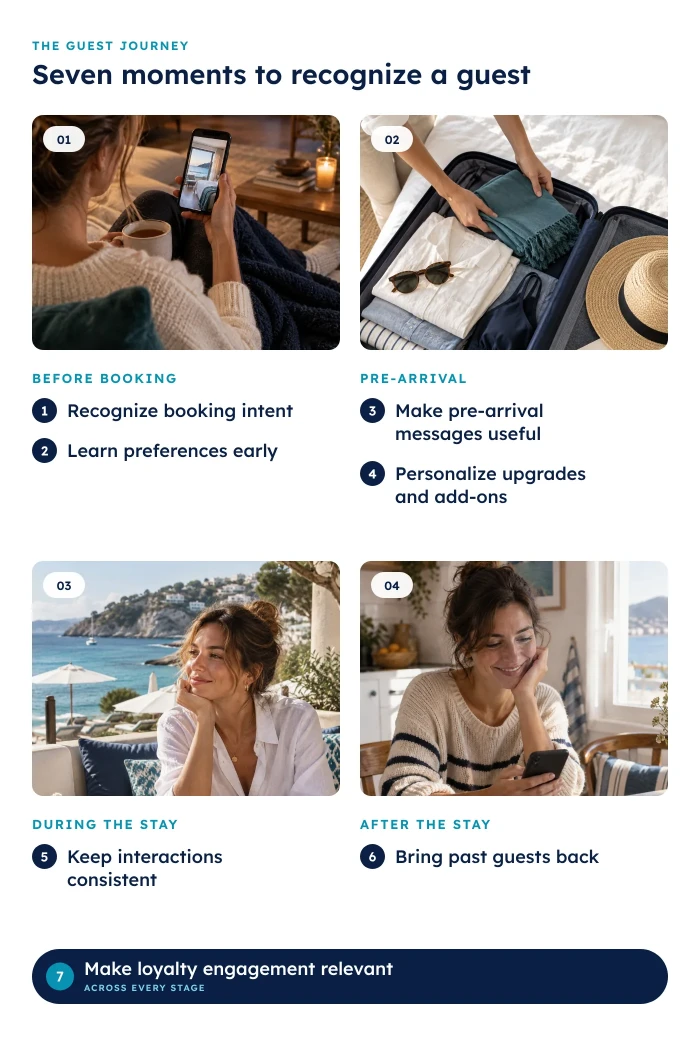
1. Recognize booking intent and encourage direct reservations
A traveler lands on your website, checks a few dates, compares room types, and leaves without booking. That visit says a lot about what they're considering. When the activity connects to a known or consented profile, a CDP can use it to shape what happens next.
The follow-up might highlight the exact room type the traveler lingered on or spotlight a perk that only comes with a direct booking. Even for visitors who haven't been identified yet, session signals can personalize the on-site experience in real time. The CDP makes the moments around the booking smarter, giving travelers more reasons to book with you.
2. Learn guest preferences before the first stay
Waiting until check-in to learn about a guest means missing most of the chance to impress them. A short trip planner, preference center, or quiz lets travelers tell you up front whether they're planning a family vacation, a business trip, or a weekend escape, as well as the experiences they're hoping for.
This kind of information is called zero-party data because guests share it with you directly. Paired with first-party signals, such as the pages someone views or the emails they open, it lets you make recommendations that actually land. A food-focused traveler might see local restaurant picks, while a family could get details on connecting rooms and nearby kid-friendly activities. The key is to offer something useful in exchange, build the profile gradually, and let guests decide how much to share.
3. Make pre-arrival messages more useful
The stretch between booking and arrival is prime time for engagement. Guests are excited, planning, and open to ideas. With booking details, past stays, and known preferences in one profile, pre-arrival messages can lead with helpful arrival information, then offer relevant extras such as parking, a dinner reservation, or an available upgrade.
Timing and coordination matter just as much as the offer itself. Nobody wants three emails pitching a dining package they already bought. With a CDP keeping profiles current, messages that no longer apply can be updated or pulled when a reservation changes or an add-on is purchased. Your booking and messaging systems handle reservation details and delivery, while the CDP keeps every message aligned with what the guest has already done.
4. Personalize upgrades and ancillary offers
A spa appointment, a late checkout, or an ocean-view upgrade might be irresistible to one guest and completely irrelevant to another. Signals like trip type, previous purchases, stated interests, and past engagement with offers help you figure out which is which.
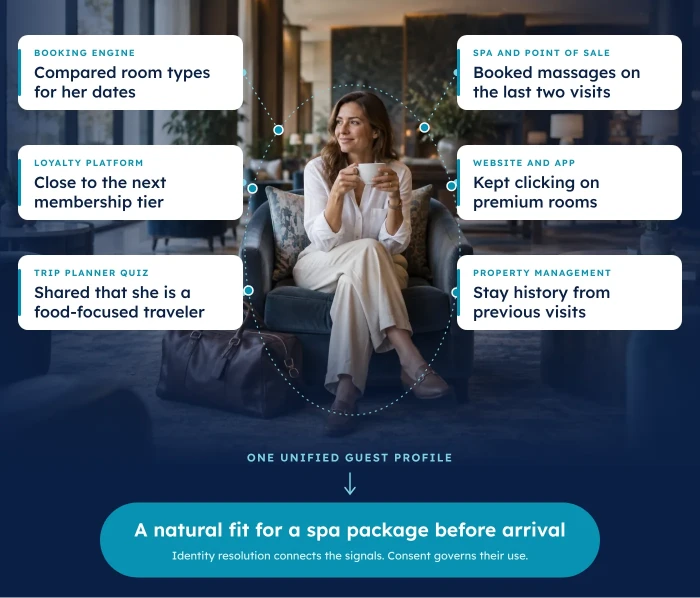
A returning guest who booked massages on their last two visits, for example, is a natural fit for a spa package before arrival. A traveler who kept clicking on premium rooms could see an upgrade option as long as one was available and they were eligible. The CDP brings those signals together to guide targeting and decisioning, and your operational systems confirm availability, pricing, and fulfillment. The result is fewer generic upsells and more offers guests actually say yes to.
5. Keep guest interactions consistent during the stay
Plans shift once guests arrive. Someone who accepts a room upgrade through your app shouldn't get an email an hour later offering the same upgrade. A guest who asks about dinner options, on the other hand, has just given you a great reason to follow up with a reservation suggestion.
A CDP keeps each profile up to date and shares the latest signals with your connected engagement tools, so digital touchpoints stay in sync rather than stepping on each other. The more systems you connect, including those your on-property teams use, the more consistent the experience becomes, with every interaction reflecting what the guest has already done.
6. Bring past guests back for another stay
A guest who has already stayed with you is one of your best prospects for the next booking, but a generic "We miss you" email rarely does the trick. Stay history, destination interests, and recent engagement give you a far better reason to reach out, such as a seasonal offer for a destination they've visited before or a note about a property they've been browsing lately.
With a CDP, you can build a segment of past guests who share a relevant travel interest and reach them through your email or advertising platform. Because the outreach is grounded in their actual history, it gives guests a genuine reason to come back, and it shows up closer to when they're likely to be planning their next trip.
7. Make loyalty engagement more relevant
Loyalty data becomes far more powerful when it's viewed alongside booking, browsing, and stay behavior. With that full context, you can acknowledge a member's status in the moments that matter, highlight progress toward a reward, or change course when engagement starts to slip.
A member who stays away from a new tier, for instance, could get a nudge explaining the perks waiting for them, along with an invitation to book. A member who has gone quiet is a better candidate for a reactivation offer than yet another routine points statement. The CDP puts loyalty signals to work in these interactions, while your loyalty platform continues to manage points, tiers, rewards, and program rules.
What data makes these hotel CDP use cases possible?
The richer the connected data, the more a CDP can do. Every property's tech stack is different, but common sources include:
- Booking engine: Searches, room selections, reservations, booking status, and changes or cancellations.
- Property management system: Stay details and other operational information.
- Loyalty platform: Membership status and program activity.
- Service and point-of-sale systems: Dining, spa, ancillary purchase, and service interaction data.
- Digital channels: Website and app behavior, email engagement, and campaign responses.
- Guest-provided information: Preferences and interests shared through forms, quizzes, or preference centers.
Identity resolution ties these signals to the right guest profile, turning scattered records into a coherent story. Consent, data quality, and access rules govern how that information is used, and operational systems continue to provide details such as availability, pricing, and eligibility. Guests who book through an online travel agency may arrive with limited information, but a CDP can start building their profile from the first anonymous visit to your site and enrich it every time they engage with your own channels.
How to choose your first hotel CDP use case
You don't need to connect every system or launch every use case on day one. The fastest wins usually come from picking one focused problem, proving results, and expanding from there.
1. Pick a measurable guest or revenue problem
Choose a goal you can put a number on, such as lifting direct booking conversion, growing ancillary revenue, or driving more repeat stays. A clear target makes it much easier to see which signals and actions matter most.
2. Check which data is available
List the guest signals your use case depends on, then confirm they're accessible, accurate, and permitted for the way you plan to use them. Knowing where the gaps are in identity, consent, or system access helps you prioritize which connections to set up first.
3. Identify the action and the channel
Decide what will change for the guest, where they'll experience it, and which connected system will deliver it. A personalized pre-arrival offer, for example, might draw on guest profile data, your email platform, and live availability from an operational system.
4. Decide how you will measure results
Tie your metric to the goal, whether that's completed direct bookings, accepted upgrades, repeat reservations, or reactivated loyalty members. Comparing results against a baseline or control group shows exactly what the use case delivered, and those insights point you toward what to refine or launch next.
How BlueConic's Customer Growth Engine supports hotel guest engagement
Knowing your guests and acting on that knowledge are two different things, and most hotel tech stacks only handle the first. BlueConic goes further. Its CDP builds live, unified guest profiles, and its Customer Growth Engine layers on AI decisioning, cross-channel engagement, and measurement, so every signal can automatically turn into a well-timed offer or message.
- One live guest profile across every channel. BlueConic updates profiles in sub-seconds, so when a guest accepts an upgrade, every channel knows immediately, and the upsell email scheduled for tomorrow never goes out.
- Guest insight before the booking exists. Destination quizzes, travel-style preference centers, and progressive capture begin building profiles from the first anonymous visit, even for travelers who eventually book through an OTA.
- Loyalty data that shapes every decision. Live loyalty signals flow into each interaction, so a member close to elite status gets a very different experience than one who has lapsed.
- Offers driven by signals, not schedules. You set the guardrails, including eligible offers, frequency caps, and channels. BlueConic's agents choose the right offer, channel, and moment for each guest, or decide to hold off entirely.
- Results that sharpen over time. BlueConic tracks what actually drove a booking or upsell, whether it was the free breakfast or the room upgrade, and adjusts future decisions accordingly.
Switzerland Tourism shows how powerful early guest insight can be. Using a simple quiz, it invited travelers to share where they wanted to go and why before any booking took place, and that first-party data fed directly into personalization downstream. Travelers didn't just tolerate the experience. They embraced it, delivering a 31.5% average engagement rate and an 80% average completion rate. And because BlueConic offers pre-configured Growth Plays for hospitality outcomes like ancillary upsell, loyalty re-engagement, and post-stay reactivation, most teams see measurable revenue results within 90 days.
Turn guest data into better experiences across the journey
Every guest leaves a trail of signals, from the first search to the post-stay survey. A hotel CDP ensures those signals shape what happens next, so offers feel timely, messages feel personal, and guests feel recognized, no matter how they booked. Start with one clear goal, prove the impact, and build from there.
Ready to see what that looks like for your properties? Explore how BlueConic helps travel and hospitality brands turn guest data into direct bookings, ancillary revenue, and lasting loyalty.
Frequently asked questions
What is a hotel CDP?
A hotel CDP connects guest data from sources such as booking engines, property management systems, loyalty programs, and digital channels. It organizes that information into unified guest profiles that your teams can use to personalize engagement across connected systems.
Can a CDP help hotels increase direct bookings?
Yes. A CDP uses browsing, booking, and preference signals to make your direct channels more relevant and persuasive, from personalized on-site experiences to follow-ups that highlight the room types and perks each traveler cares about.
How does a hotel CDP work with a loyalty program?
A CDP combines loyalty status and activity with other guest signals to make member communication more timely and relevant. Your loyalty platform continues to manage points, tiers, rewards, and program rules, while the CDP helps put that data to work.
Do hotels need a CDP if they already have a CRM?
In most cases, the two work best together. A CRM manages guest and marketing relationships, while a CDP connects data from many more sources, including web behavior, loyalty activity, and on-property purchases, and makes it usable across every channel in real time.
